
 En
 English
 Français
Reach over your right shoulder with your right hand and try to touch the middle of your left shoulder blade. Most adults miss it by a hand's width, and that patch is exactly where sweat, sunscreen residue and dead skin sit all day.
A long handle bath brush closes that gap, but the order of the steps matters more than the brush itself. The short version: soak and lather the head before it touches skin, let the handle carry the load instead of pushing with your shoulder, and dry the handle hanging or standing rather than flat on a wet shelf. Get those three right and a 38 cm brush cleans better than any hand-held pad. Get them wrong and you collect brush burn, a sore shoulder, and a handle that cracks within a month.
Content
- 1 Step-by-Step: The Wet Method Most People Get Backwards
- 2 Wet or Dry: Two Techniques That Need Different Brushes
- 3 Pressure, Angle and the Grip Nobody Explains
- 4 Handle Length: A Fit Question, Not a Spec-Sheet Number
- 5 What Separates a Handle That Lasts Two Years From Two Months
- 6 Three Minutes of Care After Every Shower
- 7 Buying One, or Specifying Ten Thousand
- 8 Frequently Asked Questions
- 8.1 How often should you use a long handle bath brush?
- 8.2 Can a long handle bath brush help with back acne?
- 8.3 What is the best bristle type for a long handle bath brush?
- 8.4 How do you clean a long handle bath brush?
- 8.5 Can you use a long handle bath brush for dry brushing?
- 8.6 What length handle do you need for a back brush?
Step-by-Step: The Wet Method Most People Get Backwards
Shower use is where a long handle brush earns its place, and nearly every mistake happens in the first thirty seconds. The brush goes onto dry skin, the soap goes onto the back instead of the bristles, and the head scrapes instead of gliding.
- Soak the head for 30 to 60 seconds. Boar, sisal and loofah fibres are stiff when dry. Warm water softens the tips and stops them scratching; nylon softens too, just faster.
- Load the brush, not your body. Rub a bar of soap across the tufts four or five times, or pump body wash into the bristles and work it into a lather in your palm first.
- Reach from below for the mid-back. An over-the-shoulder grip works for the upper blades, but passing the handle behind your waist with the head pointing up keeps the bristles flat against the spine area.
- Use short, overlapping strokes. Five to eight centimetres per stroke, half a stroke of overlap, one pass per zone. Four passes over the same patch is how brush burn happens.
- Watch the clock. Sixty to ninety seconds per zone is plenty. A full back-and-shoulders session should finish in under three minutes.
- Rinse immediately. Run the head under warm water, press the water out with a flat palm, shake twice, hang it bristles-down.
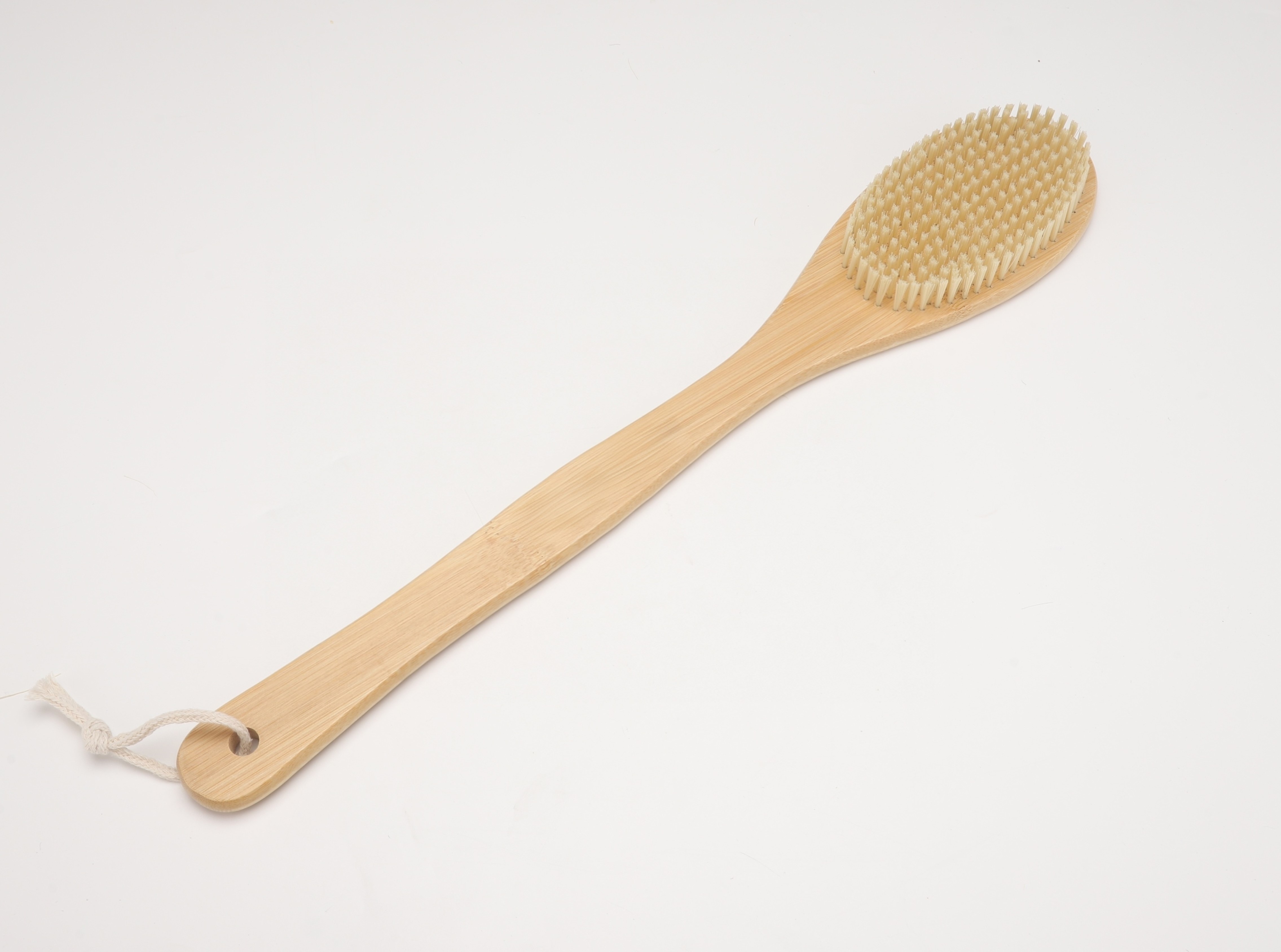 Long Handle Bamboo Bath Brush for Wet or Dry UseA bamboo and PP-bristle brush with a long handle for wet or dry body brushing, helping reach the back, shoulders and feet.View Product →
Wet or Dry: Two Techniques That Need Different Brushes
Dry brushing and shower brushing are not the same job, and one brush rarely does both well. Dry brushing works on bare, dry skin before you shower and is mostly about exfoliation; the popular claims about circulation and lymph movement come from general wellness writing rather than controlled trials, so treat them as modest.
Commonly published dermatology guidance puts mechanical exfoliation with a brush at one to three sessions a week for most adults, and less for anyone with eczema, rosacea or active breakouts. That ceiling matters more than the label on the handle.
| Decision | Wet use (shower) | Dry use (before shower) |
|---|---|---|
| Skin state | Warm and wet, under running water | Completely dry, no oil or lotion |
| Bristle that works best | Sisal, loofah, soft nylon, medium boar | Firm boar or stiff plant bristle |
| Product used | Body wash or bar soap lathered in the tufts | None |
| Pressure | Feather-light; water does half the work | Light and fast, long strokes toward the heart |
| Session length | 3 minutes or less for the whole back | 2 to 3 minutes, full body |
| Frequency | 2 to 3 times a week for most skin | 1 to 2 times a week |
| Cleanup | Rinse, squeeze, hang to drain | Dead-skin residue must be washed out the same day |
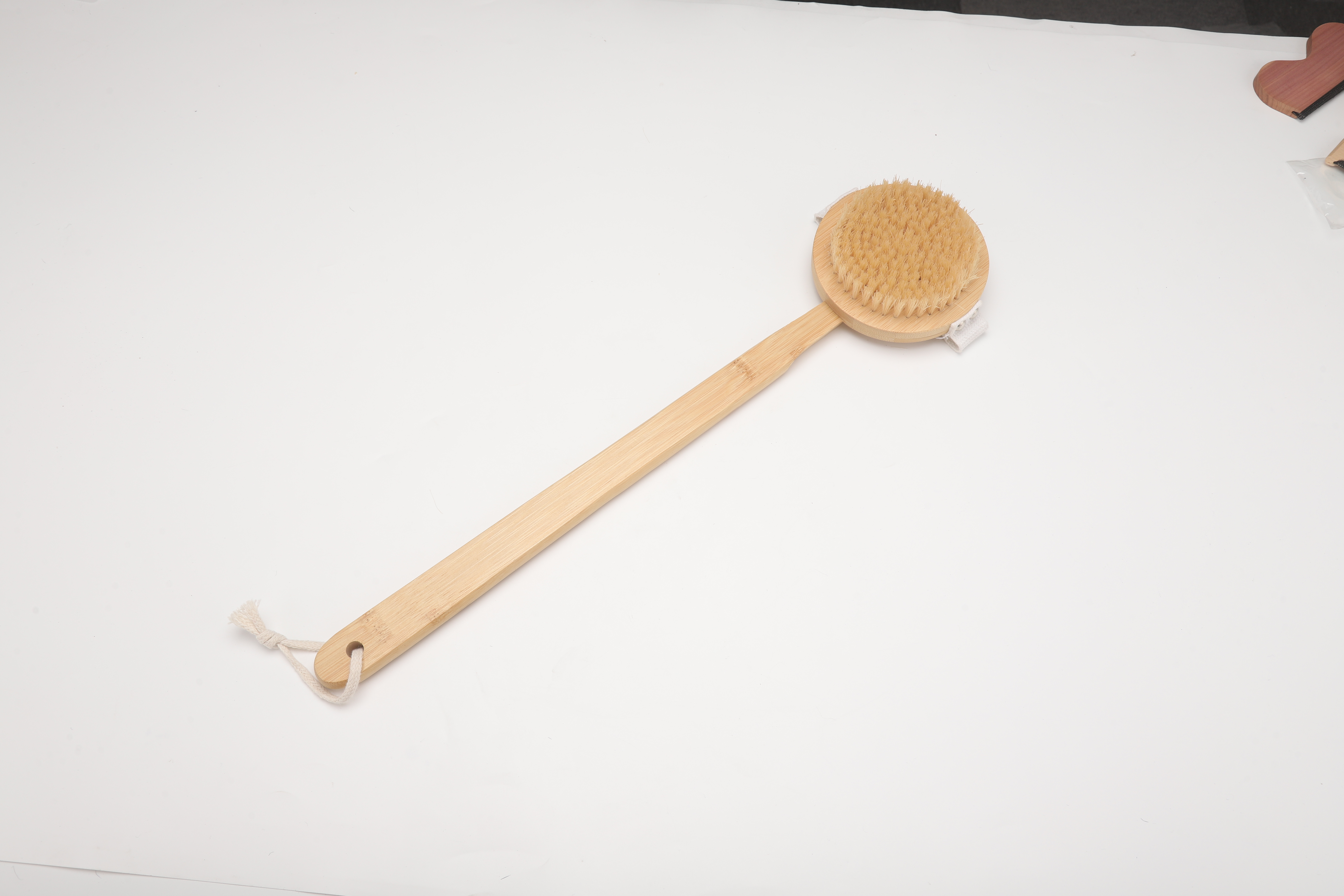 Detachable Long Handle Bamboo Sisal Bath BrushA firm sisal plant-fiber brush with a detachable bamboo handle and rounded head, suited to bath exfoliation for less sensitive skin.View Product →
Pressure, Angle and the Grip Nobody Explains
Most brush burn comes from angle, not force. Hold the handle so the bristles meet skin at roughly 30 to 45 degrees and splay slightly as they travel. Held perpendicular, the tips dig in and you press harder to compensate, so the two mistakes compound.
A pressure test you can actually feel
Aim for the weight of the brush plus your relaxed forearm. If skin stays pink for more than ten minutes after towelling off, you pressed too hard or went over the same spot too often. Redness that fades by the time you are dressed is normal; tenderness the next morning is not.
Protect the shoulder, not just the skin
Hiking your shoulder to reach the opposite blade is what leaves people sore the day after. Keep the elbow low and close to the ribs instead of lifting it above shoulder height, and swap the over-shoulder grip for the underhand grip once you work below the shoulder blades. Weight matters here too: a heavy head on a long lever is tiring to hold for three minutes.
Brushes built with a slimmer neck and a lighter head cut that fatigue noticeably, and the long handle back scrubber range shows the geometry differences at a glance.
Handle Length: A Fit Question, Not a Spec-Sheet Number
Most long handle bath brushes sold today run 35 to 45 cm. The right length is the one that reaches the middle of your back while your elbow stays below shoulder height and your shower ceiling stays out of the way. Taller users usually want 40 to 45 cm; smaller bathrooms and shorter users do fine at 35 cm, and a handle that is too long starts knocking the shower wall on every stroke.
Two practical notes: a 45 cm handle in a narrow stall becomes a liability, and a detachable head lets you shorten the tool for travel. Neither changes how well the brush cleans. Length changes reach and control, nothing else.
What Separates a Handle That Lasts Two Years From Two Months
Water is the enemy, and it attacks the joints first. Six details decide whether a wooden or bamboo brush survives daily shower use.
- A real hanging hole. Drilled clean through the end, not a shallow dimple, so the brush hangs bristles-down and water drains off the head.
- Contoured grip. A slight waist or ridge near the head end stops the handle rotating in soapy hands.
- A serviceable joint. Screw-off heads let you replace the bristle bed and pack flat; friction-fit heads loosen within months.
- Dense tufting. Closely packed tufts hold lather and spread pressure instead of concentrating it on a few tips.
- An oiled finish, not a lacquer coat. Lacquer crazes and lets water in; food-safe oil can be renewed at home in minutes.
- Straight grain at the neck. The neck is the thinnest section and the first to split when grain runs out.
Three Minutes of Care After Every Shower
Wooden brushes fail in a predictable order: the finish dulls, the grain lifts, the head cracks at the neck. This routine interrupts that sequence.
- Rinse the head under running water and press the water out with a flat palm. Never wring natural bristles.
- Shake twice and hang bristles-down, or stand the brush on its flat end if there is no hook. Never lay it flat on a wet shelf.
- Soak no longer than five minutes. Wood swells, and swelling is what cracks handles.
- Re-oil the handle every four to eight weeks with a thin coat of food-safe mineral oil, left overnight and buffed off.
- Sanitise monthly with one part white vinegar to four parts water, ten minutes, then rinse and dry fully. Skip bleach, which dulls natural bristle.
- Replace the head, or the brush, once bristles stay splayed after drying or the head rocks on the handle.
Buying One, or Specifying Ten Thousand
For a single purchase the checklist is simple: natural bristle matched to your skin, a handle that reaches without straining, and a joint you can take apart to clean. For buyers sourcing for retail, hotel or spa programmes, the same details turn into specification lines: bristle species and tuft density, wood species and moisture content, finish type (oil versus lacquer), joint construction, hanging-hole diameter, and whether the head detaches for compact shipping.
Two variables drive landed cost more than anything else on a long handle brush. Whether the head detaches, because packing volume drops sharply, and whether the finish is oiled or coated, because oiled handles need a tighter moisture spec to avoid cracking in transit. Buyers who lock those two points before sampling usually skip the usual round of failed drop tests.
Our wholesale wooden bath brushes page lists current handle lengths, bristle options and joint types available for private label runs.
 Long Handle Wooden Bath Brush with Sponge BristlesA mahogany wooden bath brush with sponge bristles and a long handle, presented for comfortable body cleaning and deep cleaning in the bath.View Product →
Frequently Asked Questions
How often should you use a long handle bath brush?
Two to three shower sessions a week suits most adults. Sensitive, eczema-prone or rosacea-prone skin usually does better at once a week with a soft bristle.
Can a long handle bath brush help with back acne?
It helps clear sweat and residue, but scrubbing active lesions makes inflammation worse. Use a soft head, glide over open spots, and see a dermatologist if breakouts persist.
What is the best bristle type for a long handle bath brush?
Boar for firm exfoliation, sisal for medium scrub, loofah or soft nylon for sensitive skin. Wet use always calls for a softer bristle than dry brushing.
How do you clean a long handle bath brush?
Rinse and hang after every shower, soak ten minutes monthly in one part vinegar to four parts water, and replace the head once bristles stay splayed.
Can you use a long handle bath brush for dry brushing?
Yes, if the bristle is firm and the skin is completely dry. Most users keep two brushes, since soap residue softens a dry-brushing bristle.
What length handle do you need for a back brush?
Thirty-eight centimetres fits most adults. Choose 42 to 45 cm if you are tall or have limited shoulder mobility, and 35 cm for small shower stalls.