

 En
En
 English
 Français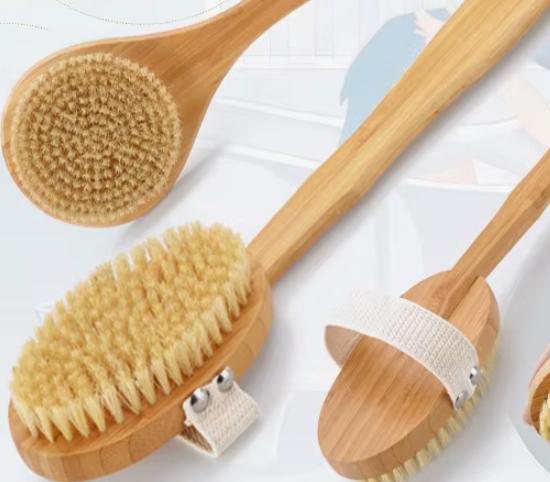
Content
- 1 Dry Brushing at a Glance: Benefits That Hold Up
- 2 What the Bristles Actually Change in Your Skin
- 3 Circulation and Lymphatic Drainage: The Downstream Effects
- 4 How to Choose a Dry Brush That Fits Your Skin and Routine
- 5 The Correct Dry Brushing Technique, Step by Step
- 6 Dry Brushing Mistakes, Myths and Realistic Expectations
- 7 Frequently Asked Questions About Dry Brushing
Dry Brushing at a Glance: Benefits That Hold Up
You probably expect a washcloth to clean you. Dry brushing works differently: a firm natural-bristle brush moves over bare skin before water gets involved. Dermatology explainers and wellness guides usually agree on the same short list of benefits — smoother skin, better circulation, lighter-feeling legs and a visible glow. None of these are vanity claims; they come from mechanical exfoliation plus stimulation of the surface blood and lymph networks.
That pattern matches what you are likely to notice in practice:
What the Bristles Actually Change in Your Skin
Dry brushing is a surface treatment with effects that reach one layer deeper. The skin surface holds a layer of dead keratinocytes that thickens over time. Firm bristles loosen that layer, which matters twice: dead cells block pores and give skin a dull look, and once removed, the layers underneath reflect light better.
Mechanical Exfoliation and Pore Clearance
When the bristles sweep across dry skin, they remove the outer layer without water softening the skin beforehand. This is why dry brushing is often gentler than scrubbing in the shower with a rough mitt; the skin is not macerated and the brush glides rather than friction-burns. With regular brushing, the keratin plug inside a pore becomes smaller, so pores look tighter and ingrown hairs are less likely to form. According to Cleveland Clinic’s dermatology explainer, the main mechanism is mechanical exfoliation plus local circulation stimulation, not chemical dissolution of keratin.
Circulation and the “Glow” Effect
Blood vessels in the dermis dilate when the surface is stimulated, increasing oxygen delivery to the area. This temporary flush is what people call the post-brushing glow. It lasts from a few minutes up to an hour, and it is complemented by lymphatic drainage, which reduces the dullness caused by fluid retention. Brushing before a shower also gives the skin a cleaner canvas for the moisturizer you apply afterwards.
Circulation and Lymphatic Drainage: The Downstream Effects
The skin’s blood and lymph vessels have no dedicated pump. Movement is what moves fluid along. Dry brushing provides that movement, and it does so more effectively than static pressure.
Why You Brush Toward the Heart
Lymphatic vessels have one-way valves. When you brush from the ankles upward, you push fluid in the same direction the valves allow. That is why most guides recommend long strokes toward the heart; it reduces the work the lymphatic system has to do on its own, especially after a long day of standing or sitting. The American Association of Naturopathic Physicians (AANMC) notes in its dry brushing overview that this directional brushing can also help with water retention and morning puffiness.
Reduced Puffiness and a Calmer Sensation
Less pooling fluid means less puffiness in the legs and around the ankles. People who stand for long hours often notice this after two to four weeks of consistent brushing. In addition, the soft rhythmic stimulation of skin nerve endings may produce a calming effect; some users describe it as similar to the feeling after a light massage.
Nervous System Stimulation
Cleveland Clinic’s dermatology content also lists nervous system stimulation as a visual benefit. The brush wakes up the nerve endings closest to the surface, which can sharpen alertness when you brush in the morning. If you brush in the evening, the same input can act as a self-care signal that the day is over.
How to Choose a Dry Brush That Fits Your Skin and Routine
Before the first stroke, the brush matters more than the technique. Three decisions determine most of the experience: bristle material, handle length, and handle material.
Bristle Material and Firmness
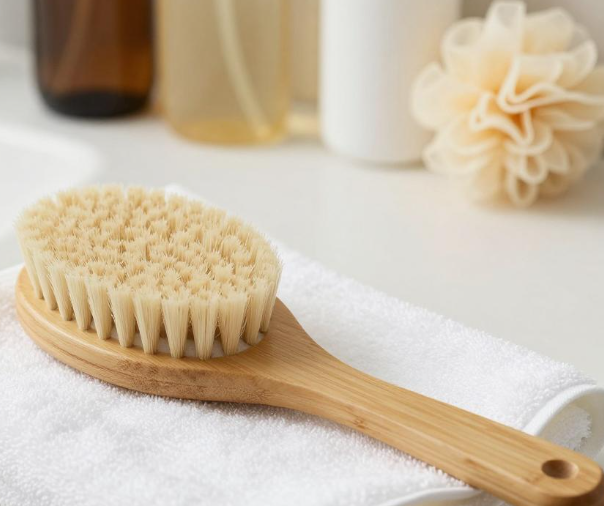
Boar bristle is the classic choice for dry body brushing. The natural split ends grab dead skin better than smooth synthetic fibers, and the firmness is high enough to exfoliate in a single gentle pass. Goat bristle is a softer alternative for smaller or more sensitive areas. Synthetic bristles rinse easily and work well for wet use, but they tend to slide on dry skin instead of gripping the surface. If you want to feel the standard before committing, natural boar-bristle dry brushes mounted on a solid wooden back give you a reliable reference point.
| Bristle type | Firmness | Best suited for | Watch out for |
|---|---|---|---|
| Natural boar bristle | Medium-firm | Full-body dry brushing | Can feel rough on very sensitive skin |
| Goat bristle | Soft | Face, neck and sensitive zones | Less exfoliating power per stroke |
| Synthetic fiber | Soft to medium | Wet use and quick rinsing | Slides on dry skin |
| Horsehair | Medium | People between soft and firm | Less common than boar bristle |
Handle Length and Brush Head Coverage
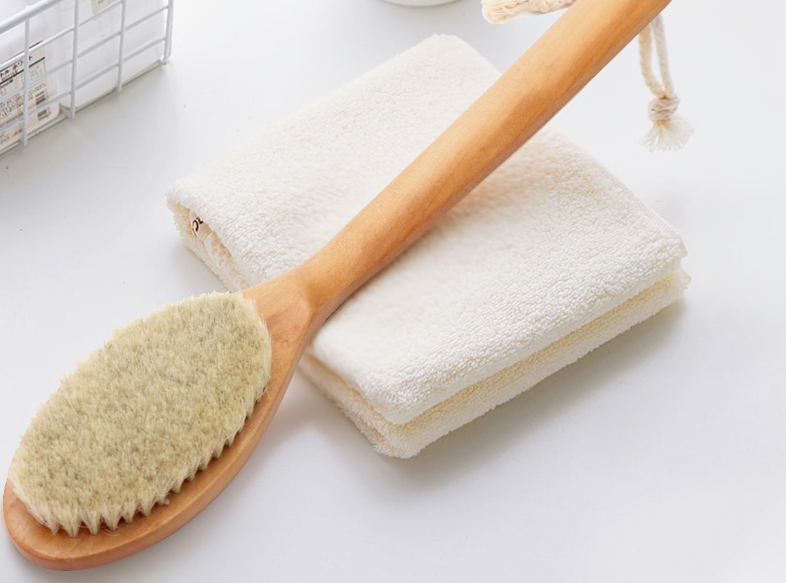
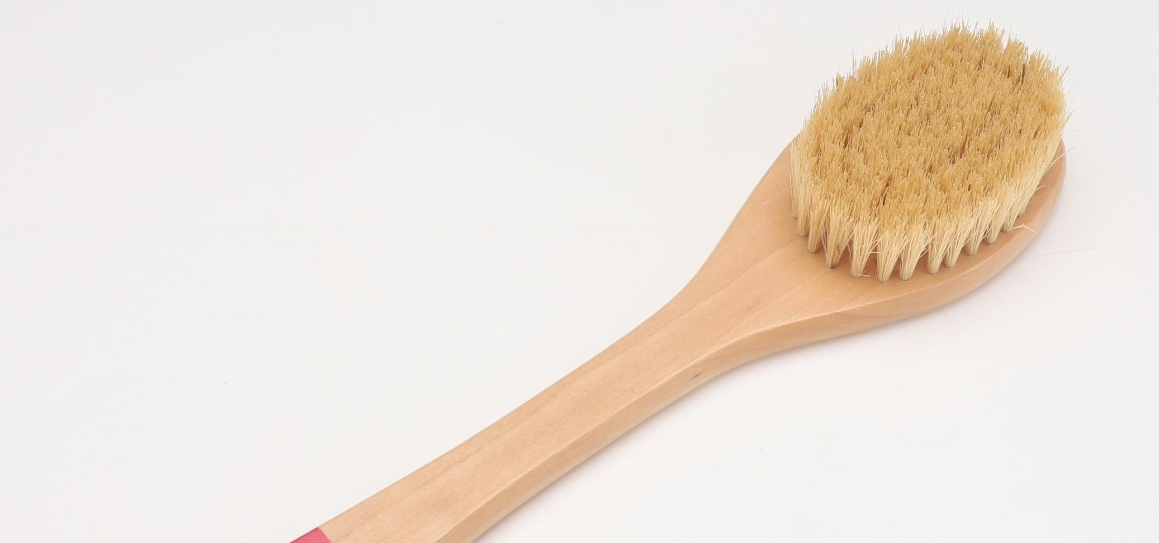
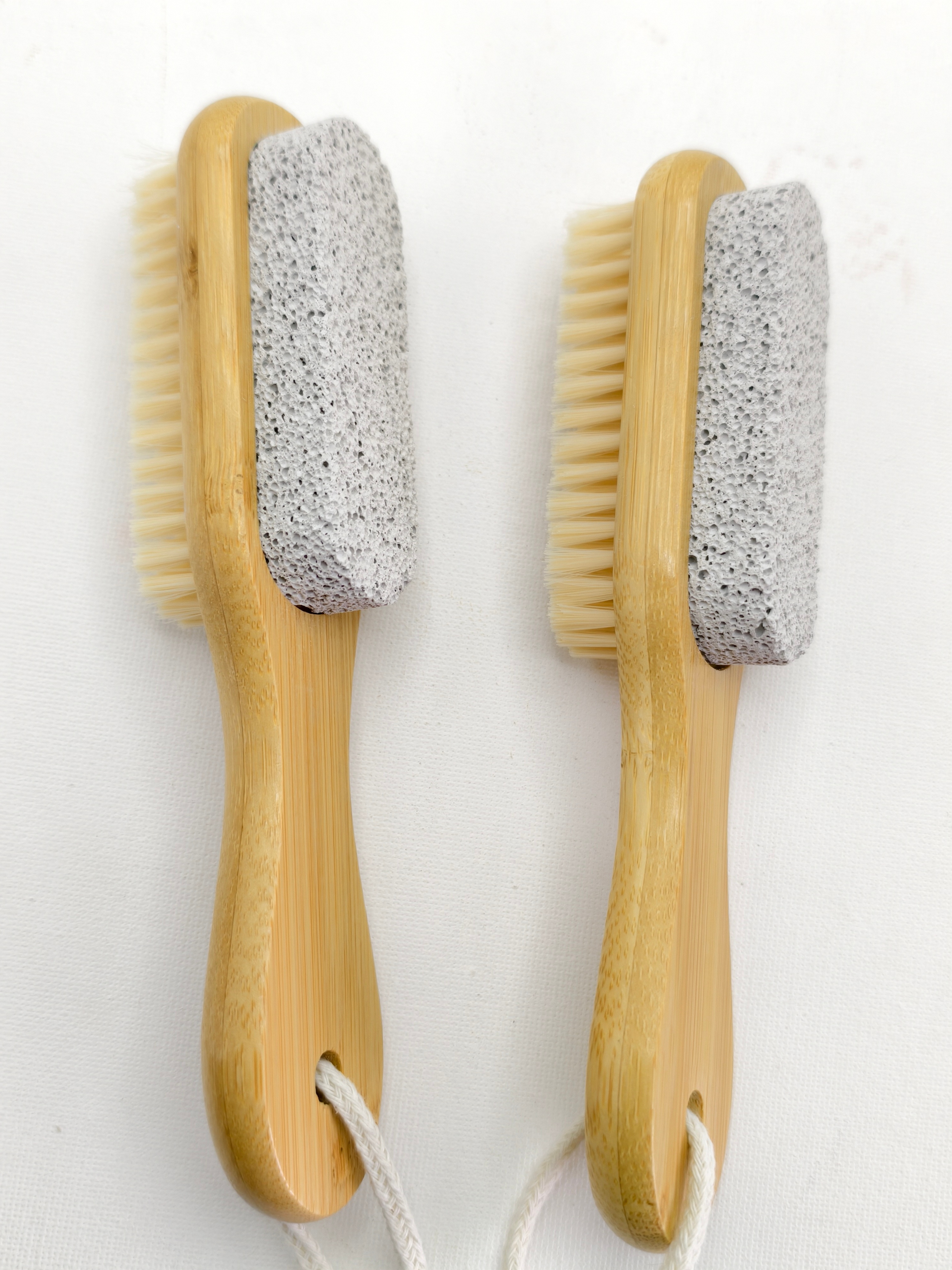
A long handle is not a convenience feature; it is what lets you brush the entire back without twisting your shoulders. For most body types, a handle length of at least 35 cm gives enough reach for the upper back. A long-handle natural wooden bath brush built for dry and wet brushing keeps pressure even across the shoulder blades, while a compact dry skin body brush made for circulation-focused massage gives precise control on forearms, shins and the back of the neck.
Handle Materials and Long-Term Value
Wooden handles — bamboo or beech — are the most practical for daily use because they dry quickly and feel warm against the skin. Bamboo also fits the sustainability angle: it is a fast-growing, renewable material that can be finished with non-toxic oils. For conscious buyers, zero-waste bath and shower tools made from natural wood and bristles avoid the plastic handles that often end up in landfill. At wholesale level, confirm that the coating is water-resistant; an unsealed wooden handle absorbs steam in a humid bathroom and may crack over time.
The Correct Dry Brushing Technique, Step by Step
The order in which you touch your body matters as much as the brush itself.
The Basic Routine
- Start on completely dry skin, ideally before a shower.
- Brush the right foot and ankle first, then move up the outside of the leg to the hip.
- Repeat on the left side, then brush the arms from the wrists toward the shoulders.
- On the abdomen and chest, use gentle clockwise strokes and avoid the nipples and groin.
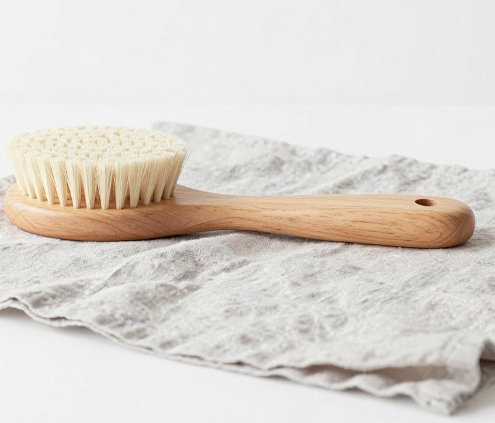
- For the face and neck, switch to a smaller head; a bamboo face brush designed for dry and wet facial brushing prevents over-stretching delicate skin.
- Shower to rinse off the loosened cells, then apply moisturizer while the skin is still slightly damp.
Frequency and Duration
Most dermatologists recommend building up gradually: start with two or three sessions per week, and increase to daily only if your skin stays calm. A full-body session should last three to five minutes. Longer sessions do not increase the benefit; they increase the chance of irritation.
Sensitive Skin and When to Avoid Dry Brushing
Dry brushing can work with sensitive skin, but the rules change. Use a soft goat-bristle brush, keep pressure light, and never brush over eczema patches, psoriasis plaques, sunburn or broken skin. If a flare-up appears, stop until the skin settles; an inflamed barrier needs rest, not friction. For a gentler setup, browse bath products designed for sensitive skin and pair the brush with a plain, fragrance-free moisturizer.
Aftercare: Finish With Moisture
Dry brushing removes dead cells but also the natural oils they hold. Replacing that moisture is not an extra step; it is part of the technique. A simple body oil, shea butter or fragrance-free lotion applied within two minutes of drying locks in the smoothness and helps the barrier recover.
Dry Brushing Mistakes, Myths and Realistic Expectations
The “Detox” Myth
The word “detox” appears constantly with dry brushing. The honest explanation is simpler: the liver and kidneys are the body’s main detox organs. Skin does eliminate some waste through sweat, but dry brushing does not pull toxins out of the body. What it actually does is improve local circulation and lymph flow, which reduces puffiness and makes skin look healthier. That is a real effect — it just does not need the detox label.
Pressure, Speed and Brush Hygiene Mistakes
Pressing hard is the most common mistake. A dry brush should glide, not scrape; if the skin turns bright red and stays red for hours, the pressure is too high. Fast, zigzag strokes are the second common mistake because they fight against the lymphatic flow. Third, a brush that is never cleaned can harbor oil and bacteria. Wash the bristles weekly with mild soap, rinse thoroughly, and dry the brush head down with good airflow.
What About Cellulite?
According to Cleveland Clinic’s dry brushing explainer, dry brushing cannot change the structure of fat under the skin, so it will not remove cellulite. Regular brushing can temporarily smooth the skin surface and reduce fluid retention, which makes dimpled skin look less obvious, but the underlying cause remains.
Frequently Asked Questions About Dry Brushing
Q1. Does dry brushing really “detox” the skin?
Not in the way the word suggests. The liver and kidneys handle detoxification. Dry brushing improves circulation and lymph flow, which reduces puffiness and improves how skin looks — a real but different effect.
Q2. How often should I dry brush?
Start with two or three times a week and keep sessions under five minutes. If your skin stays calm, you can gradually move to daily brushing.
Q3. Can I dry brush with sensitive skin or eczema?
Yes, with a softer bristle and lighter pressure, but never on an active flare-up, broken skin or sunburn. Stop and let the skin recover first.
Q4. Will dry brushing remove cellulite?
No. It cannot change the structure of fat under the skin. It may make dimpled skin look smoother temporarily, but the underlying cause stays.
Q5. How do I clean a dry brush?
Once a week, wash the bristles with mild soap and warm water, rinse well, and dry the brush head down with good airflow. This prevents oil buildup and bacteria.
Q6. Do I need to apply moisturizer after dry brushing?
Yes. Dry brushing removes oils along with dead cells. Applying a body oil or lotion within a couple of minutes helps restore the moisture barrier.
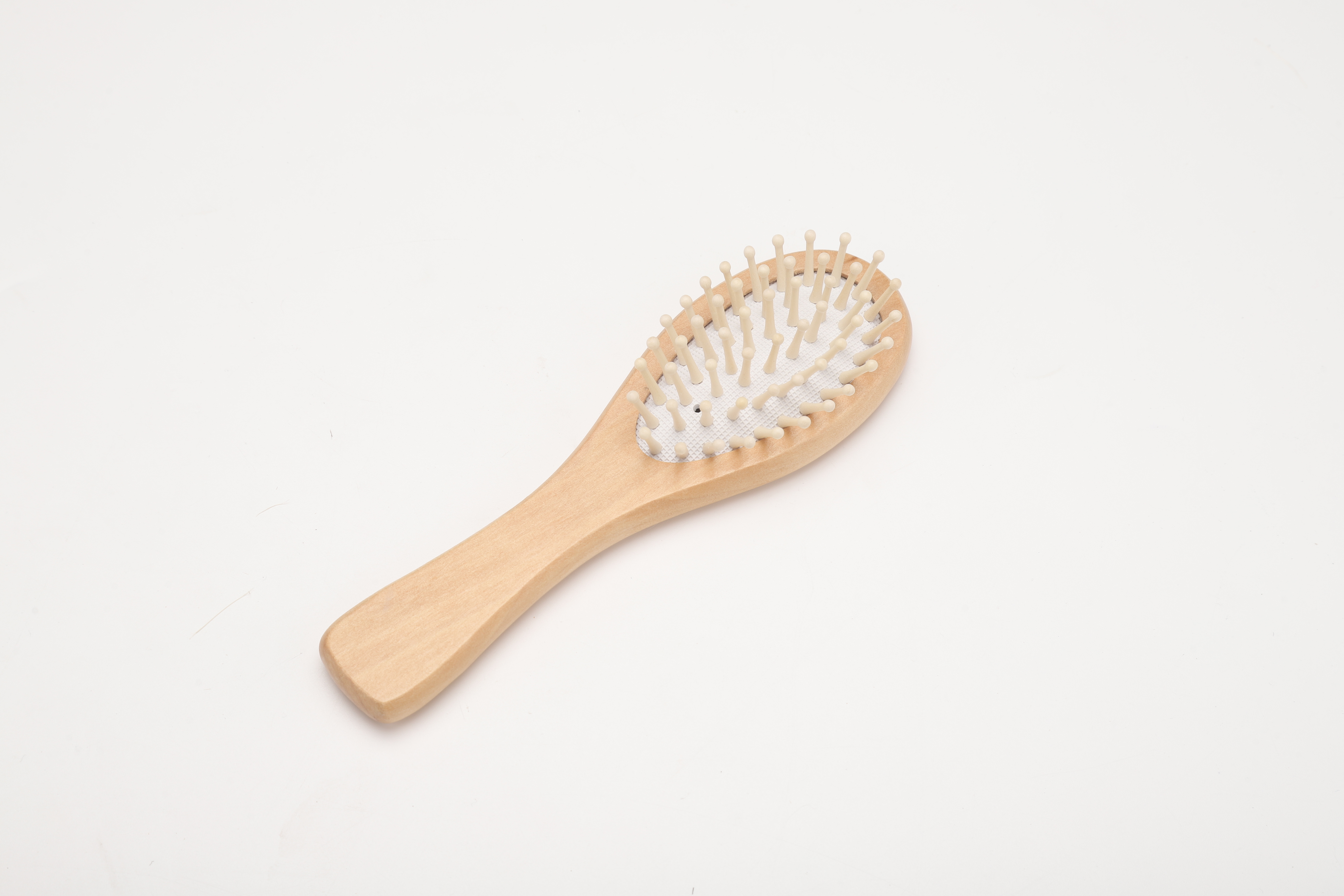
.png "mini bamboo nail brush")
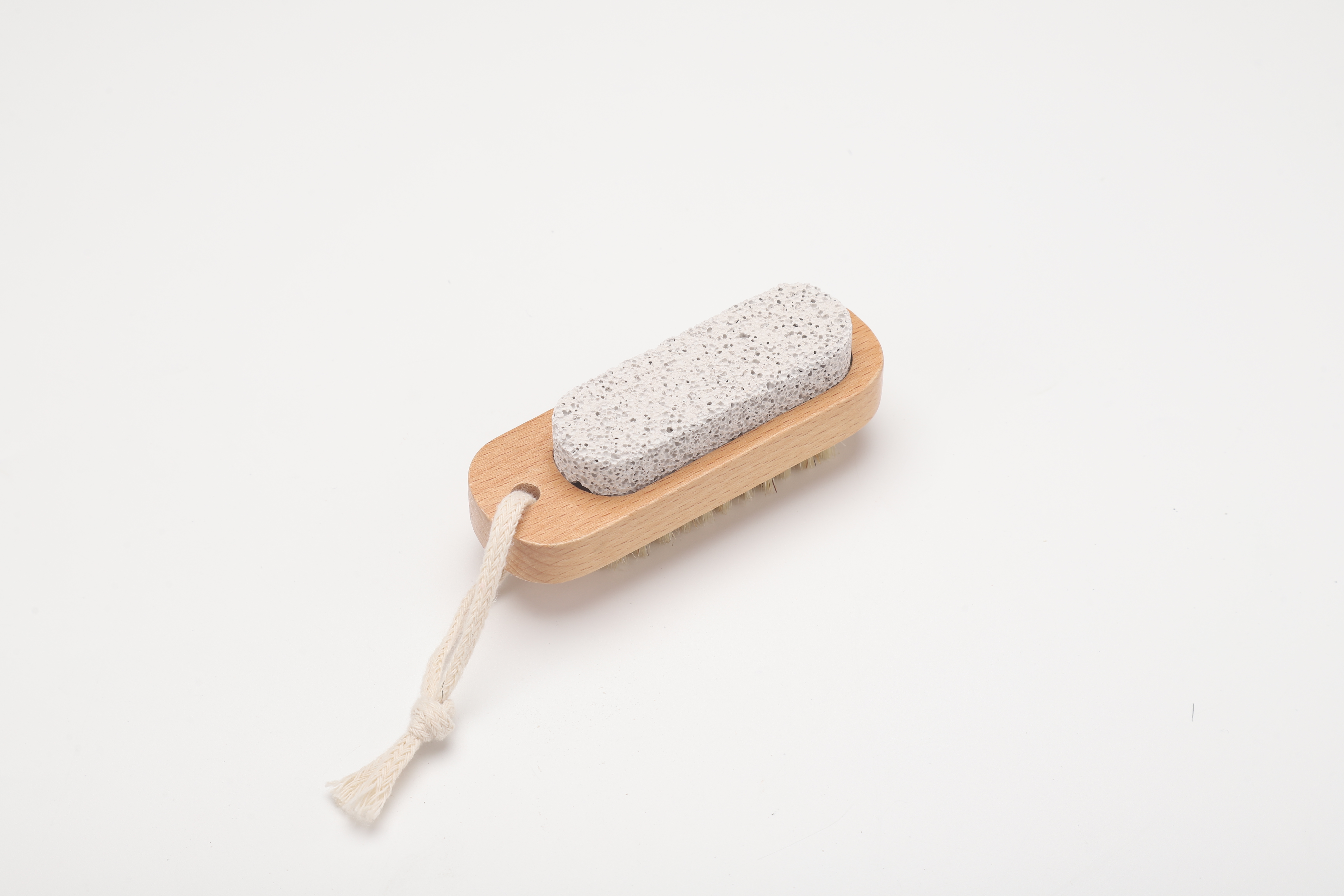
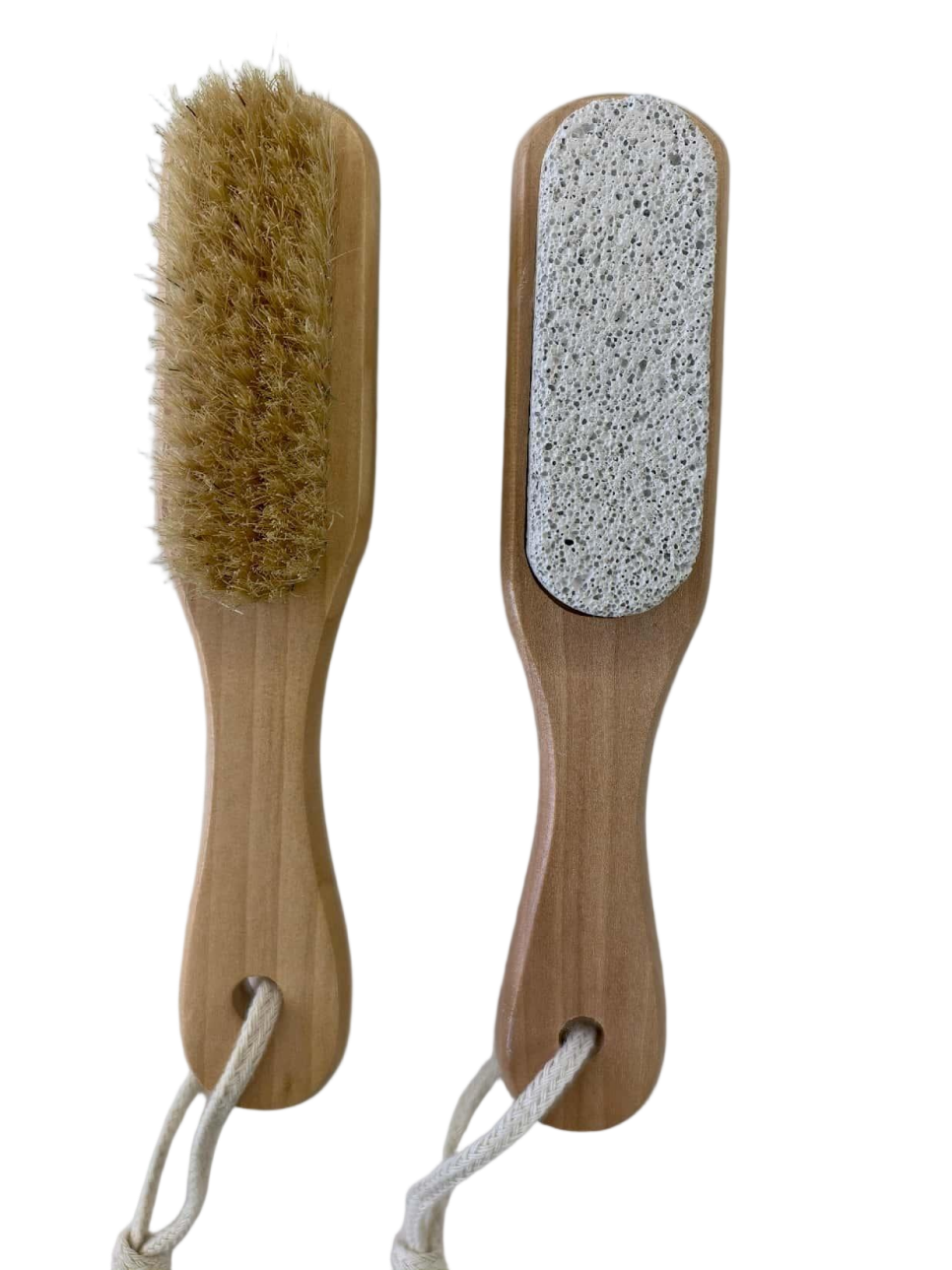
.jpg "long handle loofa bath brush")
.jpg "long handle loofa bath brush")


