

 En
En
 English
 Français
Content
- 1 Do Wooden Combs Prevent Hair Breakage: The Direct Answer
- 2 Why Hair Breakage Happens During Combing
- 3 How a Wooden Comb Helps Reduce Hair Breakage
- 4 Wooden Comb vs Plastic Comb vs Metal Comb: A Side by Side Comparison
- 5 How to Choose the Best Wooden Comb for Your Hair Type
- 6 Wooden Combs for Frizzy, Curly, Fine, and Straight Hair
- 7 Proper Combing Technique to Minimize Hair Breakage
- 8 How to Clean and Maintain a Wooden Hair Comb
- 9 Bamboo and Natural Wood: Why Material Sourcing Matters
- 10 Custom and Wholesale Wooden Hair Comb Manufacturing
- 11 About Ningbo Kafete Daily Necessities Co., Ltd
- 12 Frequently Asked Questions
Do Wooden Combs Prevent Hair Breakage: The Direct Answer
Yes, in most cases a well made wooden comb for hair breakage reduces the amount of snapping, splitting, and shedding that happens during everyday combing. The main reason is friction. Smooth, hand finished wooden teeth glide through hair strands with far less static charge and surface drag than the seam lines left behind on mass molded plastic teeth. Less drag means less lifting of the outer hair cuticle, and a smoother cuticle is directly linked to fewer snapped strands during grooming.
That said, a comb to reduce hair breakage works best as one part of a wider routine. Hair type, moisture level, how tangled the hair already is, and the actual combing motion all influence the outcome. A rounded, sanded wooden comb lowers the mechanical stress placed on each strand, but it will not undo damage caused by chemical processing, excessive heat styling, or pulling through knots without care.
- Wood generates noticeably less static charge than plastic after repeated strokes through dry hair
- Rounded, hand finished wooden teeth reduce snagging compared with plastic teeth that often keep mold seam lines
- Wide tooth wooden combs are commonly used for detangling wet or curly hair because they lower the pulling force needed to work through knots
Why Hair Breakage Happens During Combing
Hair breakage during grooming rarely comes from one single cause. It usually builds up from several small mechanical stresses that happen every time a comb passes through the hair shaft. Understanding what actually causes the damage makes it easier to see why the comb material itself matters so much.
Rough Tooth Surfaces Catch on the Cuticle
The outer layer of a hair strand, the cuticle, is made of overlapping layers that lie flat when hair is healthy. A comb with rough or uneven teeth catches on these layers as it passes through, lifting them and weakening the strand at that point. Repeated over months, this is one of the largest contributors to split ends and mid shaft breakage.
Static Friction Pulls Strands in Different Directions
Static electricity causes individual strands to separate and cling to the comb rather than moving smoothly together as a section. This uneven pull is a common reason hair feels rougher and more prone to snapping after using a low quality plastic comb, especially in dry indoor air.
Combing Wet Hair Without the Right Tool
Wet hair is more elastic and more fragile than dry hair. A narrow tooth comb forced through wet, tangled sections places a large amount of tension on strands that are already stretched, which is a frequent cause of breakage right at the point where a knot was located.
Over Tight Detangling Motions
Starting at the roots and pulling straight down through a full tangle forces every knot in the section to release at once. This concentrates stress on a small number of strands instead of spreading it out, and those strands are the ones most likely to snap.
The chart below summarizes how these four mechanical factors typically compare in terms of their relative contribution to breakage during combing, based on common patterns observed in everyday hair care routines.
Relative contribution to combing related breakage, shown on a 0 to 100 scale for illustration purposes.
How a Wooden Comb Helps Reduce Hair Breakage
Once the main causes of breakage are clear, the reasons a wooden comb performs differently start to make practical sense. The material itself changes how the comb interacts with each strand from the very first stroke.
Lower Static Buildup
Wood does not hold an electrical charge the way plastic does. As a wooden comb moves through hair, strands are far less likely to separate and cling in different directions, which keeps the section moving together smoothly instead of fighting against itself.
A Naturally Smoother Tooth Surface
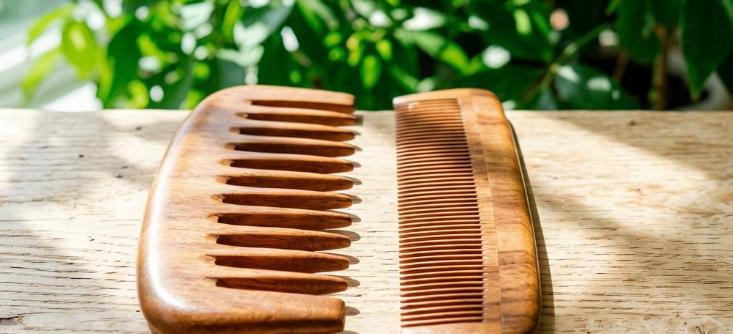
Wooden teeth are typically shaped, sanded, and polished individually or in small batches, which removes the sharp seam lines that injection molded plastic teeth often carry from the manufacturing process. A smoother tooth edge is a direct, practical reason a comb to reduce hair breakage is so often recommended over standard plastic versions.
Even Distribution of Natural Scalp Oils
As the comb passes from root to tip, the porous surface of untreated wood helps carry a small amount of the scalp's natural oils along the length of the hair. This light conditioning effect can make strands feel less brittle by the time the comb reaches the ends, where breakage is most common.
A Gentler Overall Detangling Motion
Wider spaced wooden teeth encourage a slower, more deliberate stroke rather than a fast yank through the hair. This alone reduces the sudden tension spikes that are one of the most common triggers of snapped strands during daily grooming.
Static buildup is easiest to see over repeated strokes. The line chart below compares how static charge tends to accumulate on dry hair when using a wooden comb versus a standard plastic comb across a growing number of strokes.
Relative static charge buildup on dry hair across repeated comb strokes, shown for illustration purposes.
Wooden Comb vs Plastic Comb vs Metal Comb: A Side by Side Comparison
Choosing between comb materials becomes easier once the practical differences are laid out side by side. Each material has a distinct feel, and the right choice often depends on hair type as much as personal preference.
| Feature | Wooden Comb | Plastic Comb | Metal Comb |
|---|---|---|---|
| Static generation | Low | High | Moderate |
| Tooth surface smoothness | Smooth when sanded well | Often has seam lines | Smooth but can feel cold and rigid |
| Scalp feel | Gentle, warm to the touch | Neutral | Can feel harsh on sensitive scalps |
| Natural oil distribution | Supports light oil transfer | Minimal | Minimal |
| Material renewability | Renewable, biodegradable | Petroleum based | Mined material |
The radar chart below places these same qualities on a single visual scale so the overall pattern is easier to see at a glance.
Illustrative scoring across five common comb qualities, shown on a 0 to 10 scale.
How to Choose the Best Wooden Comb for Your Hair Type
Not every wooden comb works the same way for every head of hair. Tooth spacing, comb size, and even the handle shape all change how much control and comfort a comb offers during daily use.
| Hair Type | Recommended Tooth Spacing | Notes |
|---|---|---|
| Fine or thin hair | Fine to medium spacing | Lighter pressure reduces stress on delicate strands |
| Thick or coarse hair | Wide spacing | Wider teeth move through dense sections with less pulling |
| Curly or coily hair | Wide spacing | A wooden comb for detangling hair with wide teeth works section by section from the ends upward |
| Wavy hair | Medium spacing | Medium spacing keeps the natural wave pattern intact |
| Chemically treated hair | Wide spacing | Treated strands are more fragile and benefit from a slower, gentler stroke |
Beyond tooth spacing, the finish of the wood matters. A smooth, sealed surface with rounded tooth tips moves through hair more comfortably than a rougher unfinished piece, which is worth checking closely before choosing a comb.
Wooden Combs for Frizzy, Curly, Fine, and Straight Hair
Frizz and breakage are closely related. When the cuticle is repeatedly disturbed by a rough comb, individual strands separate from the rest of the section and stand away from the hair, which reads visually as frizz. A wooden comb for frizzy hair helps because the smoother surface keeps the cuticle lying flatter as it passes through, so fewer strands are lifted out of place.
Curly and coily hair patterns tend to see the largest practical benefit, since these hair types already carry more natural friction between strands. A natural wooden hair comb with wide, rounded teeth reduces the extra resistance that curl patterns create during detangling. For fine or straight hair, the main benefit is usually a calmer, less staticky finish rather than a dramatic change in curl definition.
Many people also use a rounded tooth wooden comb for light scalp stimulation before styling. A wooden comb for scalp massage distributes light pressure across the scalp while the wider teeth pass gently through the roots, which some people find relaxing as part of a daily routine.
Relative frizz control rating by hair type when using a smooth, wide tooth wooden comb, shown on a 0 to 100 scale.
Proper Combing Technique to Minimize Hair Breakage
Even the best comb cannot fully offset a rushed or overly forceful combing motion. Technique plays just as large a role as the material of the comb itself.
- Start at the very ends of the hair and work through any small tangles first, rather than beginning at the roots.
- Move upward in small sections, only combing through a new section once the one below it is fully smooth.
- Hold the hair section gently just above where the comb is working to reduce tension on the scalp and roots.
- For wet hair, use a wide tooth wooden comb first and switch to a finer comb only once knots are fully released.
- Never force a comb through a knot, back off slightly and use fingers to loosen the tangle before continuing.
- Finish with slow, even strokes from root to tip once the hair is detangled, which helps distribute natural oils along the strand.
Following this order consistently is one of the simplest ways to get more benefit out of any comb to reduce hair breakage, regardless of the exact hair type or comb size being used.
How to Clean and Maintain a Wooden Hair Comb
Wood behaves differently from plastic when it comes to cleaning, since it is a porous, natural material. A short routine keeps the surface smooth and helps the comb continue performing well over time.
- Wipe away loose hair and dust with a soft, dry cloth after each use
- Use a soft brush to remove product buildup from between the teeth every few weeks
- Apply a very small amount of natural oil occasionally to keep the wood surface conditioned
- Store the comb in a dry place away from direct sunlight
- Avoid soaking the comb in water for extended periods, since wood can swell and crack
- Avoid placing the comb near direct heat sources such as a radiator or hair dryer airflow
- Avoid harsh chemical cleaners, a damp cloth is usually sufficient
- Avoid leaving the comb in a humid bathroom for long stretches between uses
Bamboo and Natural Wood: Why Material Sourcing Matters
The type of wood used in a comb affects both how it feels in daily use and how it fits into a broader approach to sustainable personal care. Bamboo, in particular, has become a popular choice because it grows quickly and regenerates without needing to be replanted after harvesting, which sets it apart from slower growing hardwoods.
A bamboo wooden comb supplier typically works with material that is naturally durable despite being lightweight, and bamboo's tight grain structure allows for a smooth, splinter free finish when properly sanded. This makes it a common material choice alongside traditional hardwoods for an eco friendly hair comb.
Choosing a natural wooden hair comb over a plastic alternative also has a simple end of life advantage, since untreated wood and bamboo break down naturally over time rather than persisting in the environment the way plastic does. For anyone building a lower impact personal care routine, the comb is often one of the easiest daily items to switch.
Custom and Wholesale Wooden Hair Comb Manufacturing
Businesses sourcing combs for retail, salons, hospitality amenities, or private label product lines generally look for a partner that can handle both consistency and customization across larger order volumes. Working with an established wooden hair comb manufacturer makes it easier to standardize tooth spacing, handle shape, and finishing across an entire production run.
A custom wooden hair comb program typically covers choices such as wood or bamboo type, comb size and shape, surface finish, laser engraving or branding, and packaging format. For buyers exploring a wholesale wooden hair comb arrangement, it also helps to confirm sample availability, production lead times, and quality inspection steps before committing to a full order.
| Established | Location | Export Reach |
|---|---|---|
| 2017 | Cixi, Zhejiang, China | Over 40 countries, mainly the United States, Europe, and Japan |
About Ningbo Kafete Daily Necessities Co., Ltd
Ningbo Kafete Daily Necessities Co., Ltd is based in Cixi, Zhejiang, China, and focuses on the research, development, production, and sale of bath brushes, hair brushes and combs, other wood and plastic grooming tools, massagers, and related bath and beauty products. The company works with customers across a wide range of markets and has built its export business primarily around the United States, Europe, and Japan.
Quality Focus
Material selection centers on durable, sustainably sourced bamboo and wood, with screening steps built into the early stages of production. Products move through shaping, sanding, and polishing so that the finished surface is smooth and comfortable to use, with attention paid to structural stability and an ergonomic feel in the hand.
Environmental Approach
Production processes are managed with an eye toward reducing energy use and material waste, including recycling offcuts where possible. Coatings and adhesives used on finished products are selected with the goal of minimizing the release of unwanted substances during normal use, and the company supports broader efforts around responsible forestry and renewable bamboo and wood sourcing.
Customer Support Approach
The team offers product consultation for buyers who need a solution tailored to a specific use case, along with responsive follow up on inquiries and after sales questions such as usage guidance and support with product concerns. The goal across each interaction is to make the sourcing process straightforward for customers building out their bath and personal care product lines.
Frequently Asked Questions
| Q1. Wooden comb vs plastic comb, which is better for reducing breakage A wooden comb generally causes less static and less surface drag, which is why it is commonly recommended as a comb to reduce hair breakage over a standard plastic option. |
Q2. What are the main benefits of using a wooden hair comb Lower static, a smoother tooth surface, gentler detangling, and light natural oil distribution are the most commonly reported benefits of switching to wood. |
| Q3. How do I choose the best wooden comb for my hair type Match tooth spacing to hair density and texture, wider spacing for thick, curly, or coily hair, and finer to medium spacing for fine or straight hair. |
Q4. Can wooden combs reduce hair frizz Yes, a smooth wooden surface keeps the hair cuticle lying flatter as the comb passes through, which typically results in noticeably less frizz over time. |
| Q5. How do I clean a wooden hair comb Wipe it after each use, brush out buildup periodically, avoid soaking it in water, and store it in a dry place away from direct heat. |
Q6. Are wooden combs good for curly hair Wide tooth wooden combs are a popular choice for curly and coily hair since they lower the resistance felt during detangling compared with narrow tooth tools. |
| Q7. How can I import wooden hair combs from China Buyers typically start by requesting samples, confirming tooth spacing, wood type, and finishing options, then reviewing production lead times before placing a wholesale order. |
Q8. How long does a wooden comb typically last With regular light cleaning and dry storage away from heat, a well made wooden comb can remain in daily use for a long period compared with lower quality plastic alternatives. |
.png "mini bamboo nail brush")
.jpg "long handle loofa bath brush")
.jpg "long handle loofa bath brush")


