
 En
 English
 Français
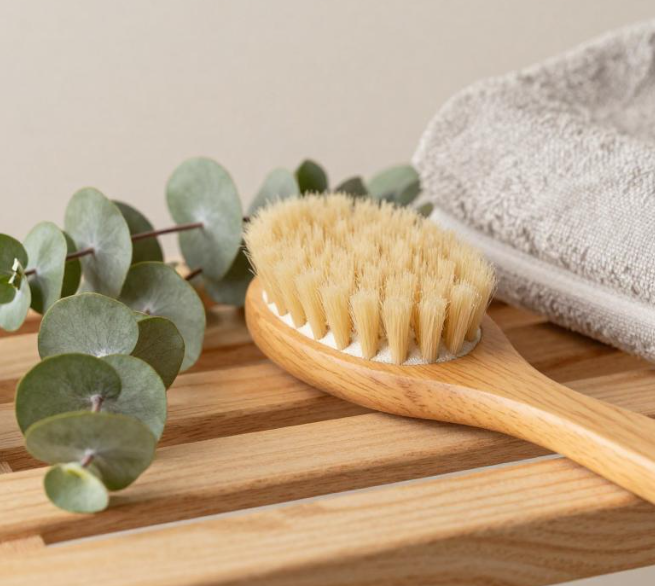
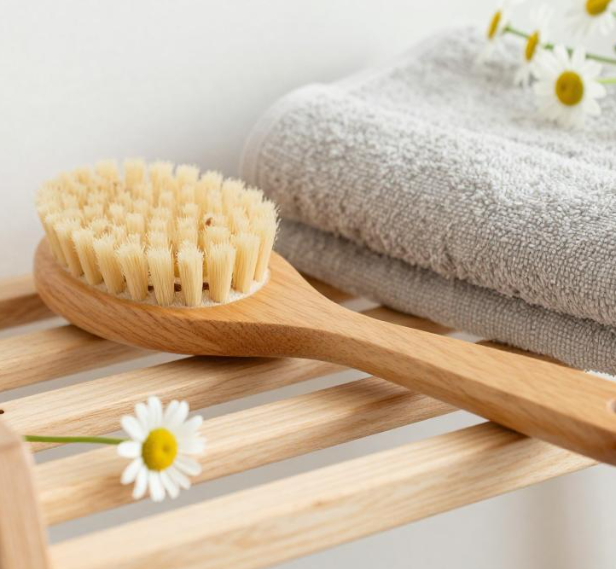
Does dry brushing do anything? Yes — but the honest list is far shorter than the one on social feeds. Dry brushing reliably lifts dead cells off the surface of your skin and briefly increases blood flow to the area you work on. It does not detoxify your body, dissolve cellulite, or tighten loose skin. Everything beyond those two effects is either a softer version of the same thing or a claim dermatologists have been pushing back on for years.
Here is a test worth running tonight. Brush one forearm for thirty seconds, wait ten minutes, then compare it with the other arm. The brushed side will look faintly pinker and feel slightly smoother. That is the true size of the effect: modest, real and temporary. Knowing that changes two decisions — how much a brush is worth paying for, and whether those five minutes belong in your morning at all.
Content
What Dry Brushing Actually Does
At its core, dry brushing is mechanical exfoliation. You drag a bristled surface across dry skin and physically dislodge the outermost layer of corneocytes — the flattened, already-dead cells that form the stratum corneum. The Cleveland Clinic describes the practice as a way to exfoliate and increase blood circulation without robbing the skin of moisture the way hot water and soap can. Both effects are genuine. Neither is dramatic.
It removes dead surface cells
This is the best-supported benefit and the easiest to verify yourself. Smoothing comes from physically removing surface debris, so skin looks less flaky and less dull afterwards. Nothing deeper than the top layer changes.
It produces a short-lived circulation boost
Friction triggers local vasodilation, which is why the brushed area turns pink and feels warm. It is a temporary response, not a lasting change to your circulation.
It improves how skin feels — for about a day
Reported improvements in texture are real but short-lived, because the skin keeps producing new cells. Two or three sessions a week maintain the smoothness; a single session does not.
What it does not do
- It does not detoxify your body. Lymph moves because of muscle contraction, breathing and arterial pulsation. Skin brushing does not accelerate that, however often the phrase "lymphatic drainage" appears alongside it.
- It does not remove cellulite. Cellulite involves fibrous bands and fat distribution beneath the skin. Westlake Dermatology states plainly that dry brushing does not reduce it.
- It does not fade stretch marks or tighten loose skin. Both sit in the deeper dermis, well out of reach of a bristle.
For a longer walkthrough of the same question, our industry notes on whether dry brushing really works cover the mechanism in more detail.
How Strong Is Each Popular Claim?
If you keep only one visual from this article, keep this one. It summarises how each commonly advertised benefit lines up with published dermatology commentary — a judgement of evidence strength, not a measured dataset.
The pattern holds: the closer a claim stays to the surface of the skin, the better it survives scrutiny. Claims that require reaching the lymphatic system, the dermis or the fat layer do not.
Why the Brush Itself Decides the Result
Two people can dry brush for the same three minutes and get opposite outcomes, because bristle material, bristle density and edge finishing do most of the work. A stiff sisal brush dragged across the neck will leave it red for an hour; the same pressure on the soles of the feet is barely noticeable.
Firmness is a specification rather than a marketing word. It comes down to bristle diameter, tuft density and trim length, which is why two brushes that look identical online can behave completely differently on the same skin. Natural boar bristle body brushes sit in the middle of that range and suit most people.
| Bristle material | Firmness | Best for | Watch out for |
|---|---|---|---|
| Boar bristle | Medium to firm | Full-body brushing on normal skin | Needs to dry fully between uses |
| Sisal (agave fibre) | Firm | Back, legs, elbows, heels | Too aggressive for neck and chest |
| Nylon or synthetic | Soft to medium | Sensitive skin and beginners | Loses shape faster than natural fibre |
| Loofah, hemp or sponge | Soft | Daily shower use on delicate skin | Not firm enough for true dry brushing |
| Goat hair | Very soft | Facial dry brushing only | Never firm enough for body work |
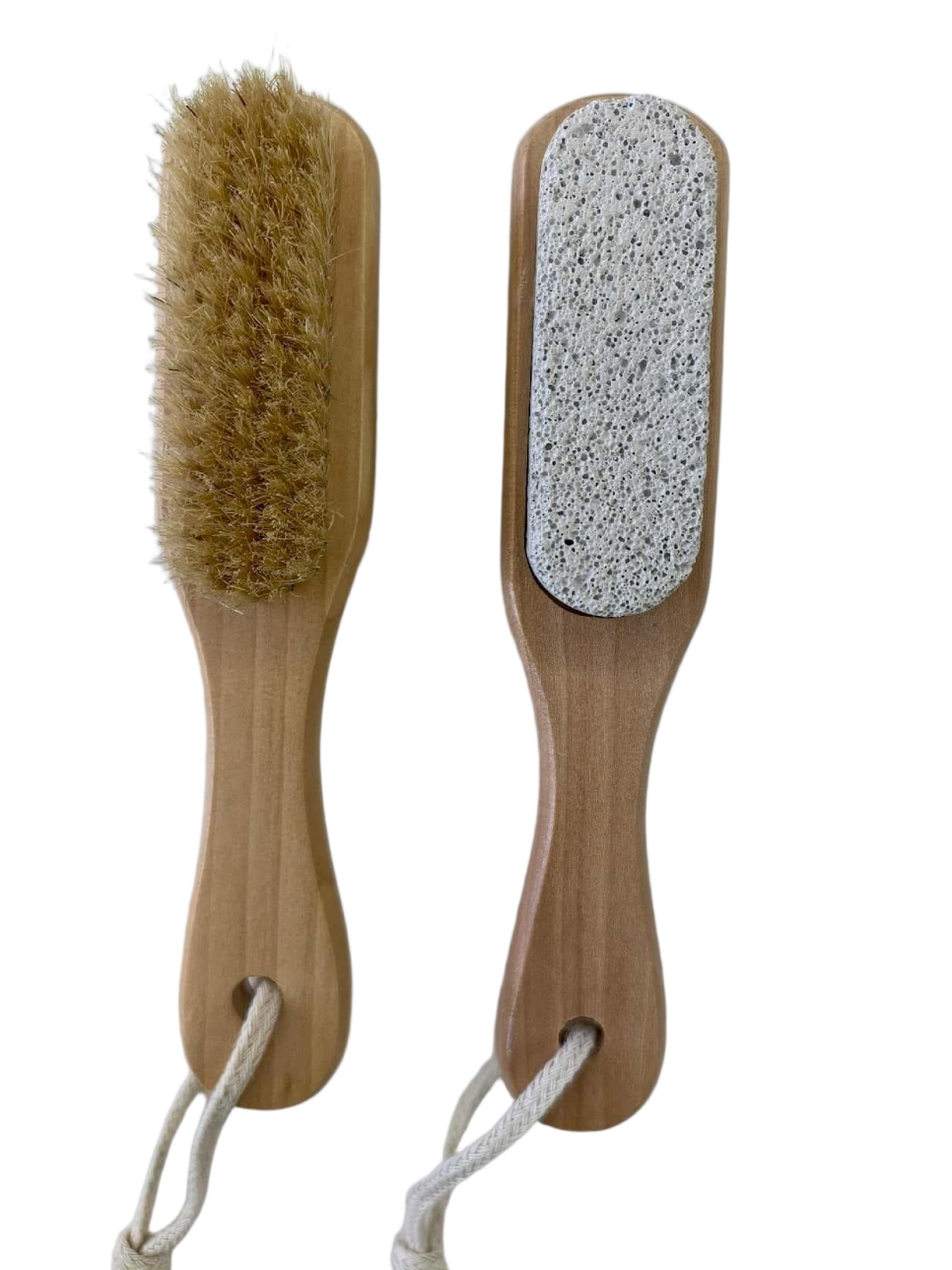
A long handle is the second decision, and it matters more than most shoppers expect. Reaching the upper back and shoulder blades with a short handheld brush forces awkward angles, and awkward angles usually mean too much pressure. A long-handled wooden brush keeps the stroke straight and even.
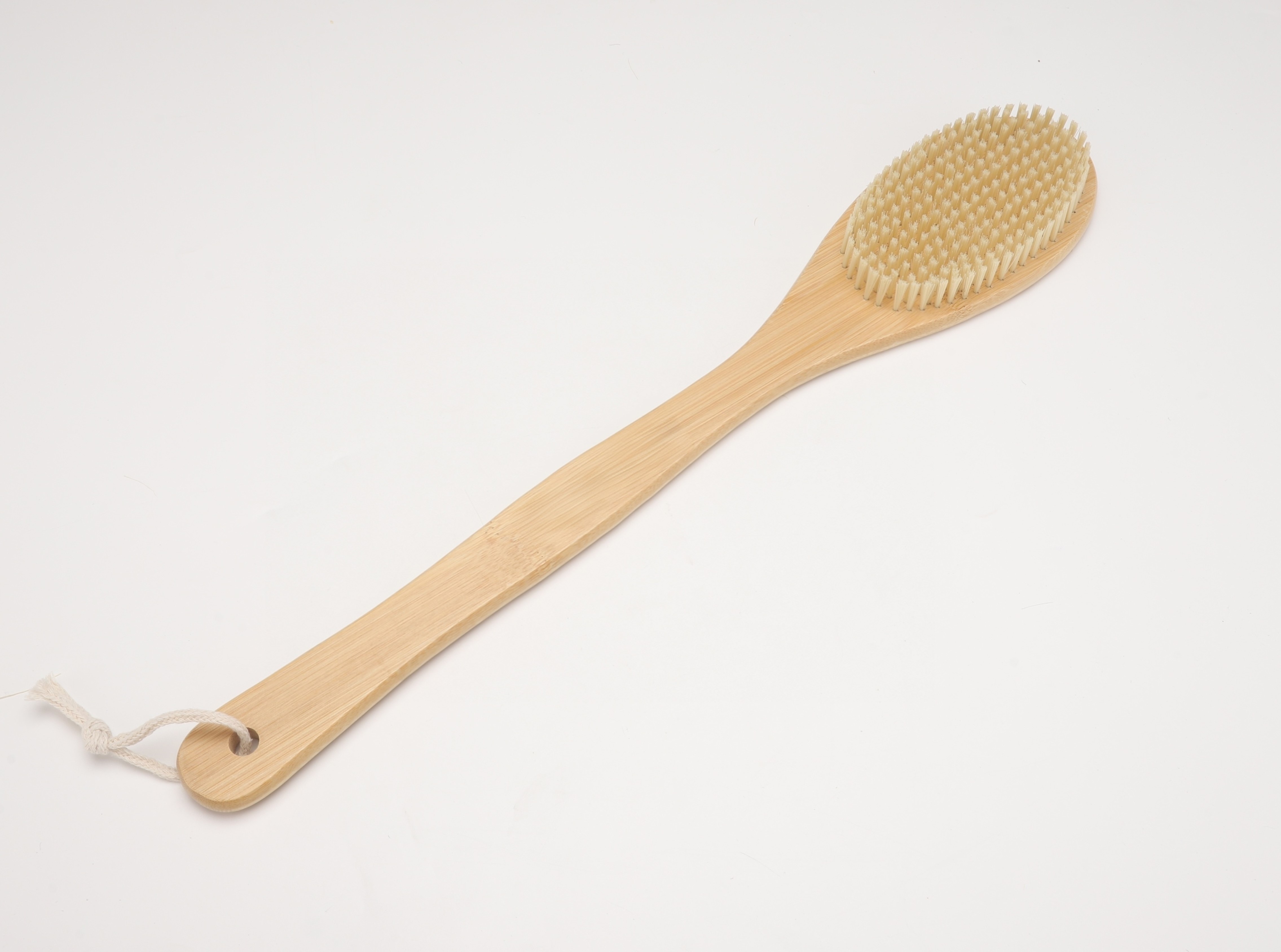 Long-Handled Bamboo Body Brush for Wet and Dry UseA long handle helps reach the back and shoulders evenly, while bamboo and PP bristles suit wet or dry body brushing.View Product →
The face is a different job altogether. Facial skin is thinner, and bristles that feel pleasant on your legs feel like sandpaper on your cheeks. Facial dry brushing should therefore use a dedicated soft brush with dense, rounded goat bristle tips and a small head that reaches the jawline without dragging.
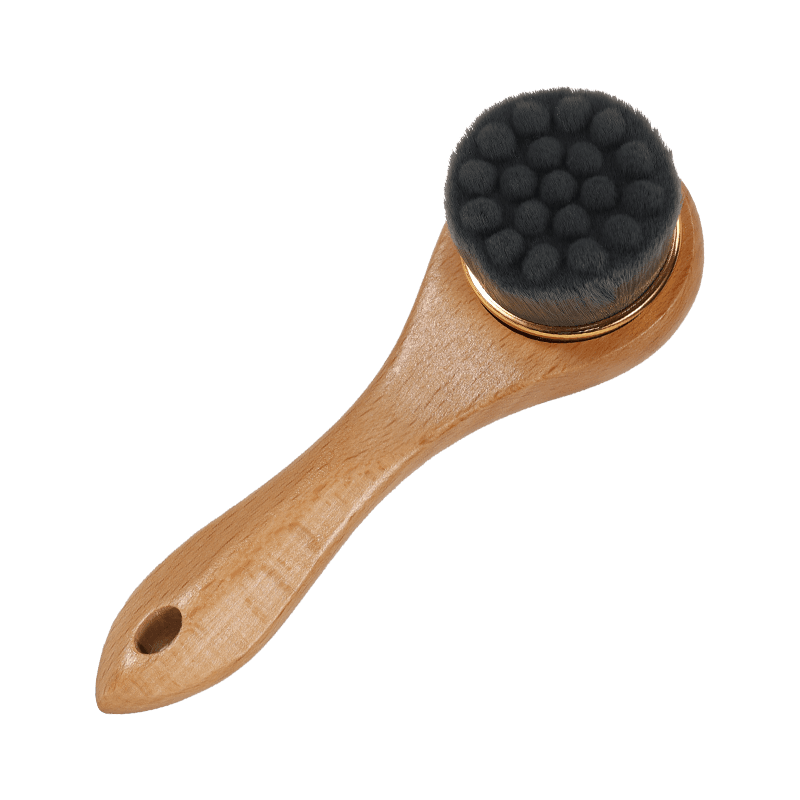 Natural Goat Bristle Bamboo Facial Cleansing and Dry BrushA facial cleansing and dry brushing brush designed for the face and neck, with goat bristle and bamboo construction.View Product →
Material choice also decides how long a brush lasts. Bamboo and hardwood handles cut, sanded and finished properly will not splinter along the edge — and the handle edge is exactly where your palm sits during every stroke.
How to Dry Brush So It Actually Does Something
Technique matters more than frequency. A gentle three-minute session twice a week does more for skin than a hard daily scrub — and hard scrubbing is what causes most of the redness people complain about.
- Start on completely dry skin, before you shower. Damp skin swells slightly and turns exfoliation into abrasion.
- Use light pressure. The bristles should glide, not dig. If skin stays red for hours, you pressed too hard.
- Work upward from the feet toward the heart, using long strokes on the limbs rather than circles.
- Keep each session to three to five minutes. Brushing longer does not exfoliate more, it only irritates.
- Give extra attention to elbows, knees and heels, where skin is thicker and tolerates firmer bristles.
- Skip the face unless the brush was designed for it.
- Shower, pat dry, then moisturise within a few minutes while skin is still damp.
- Repeat two or three times a week. Daily dry brushing is rarely necessary and often counterproductive.
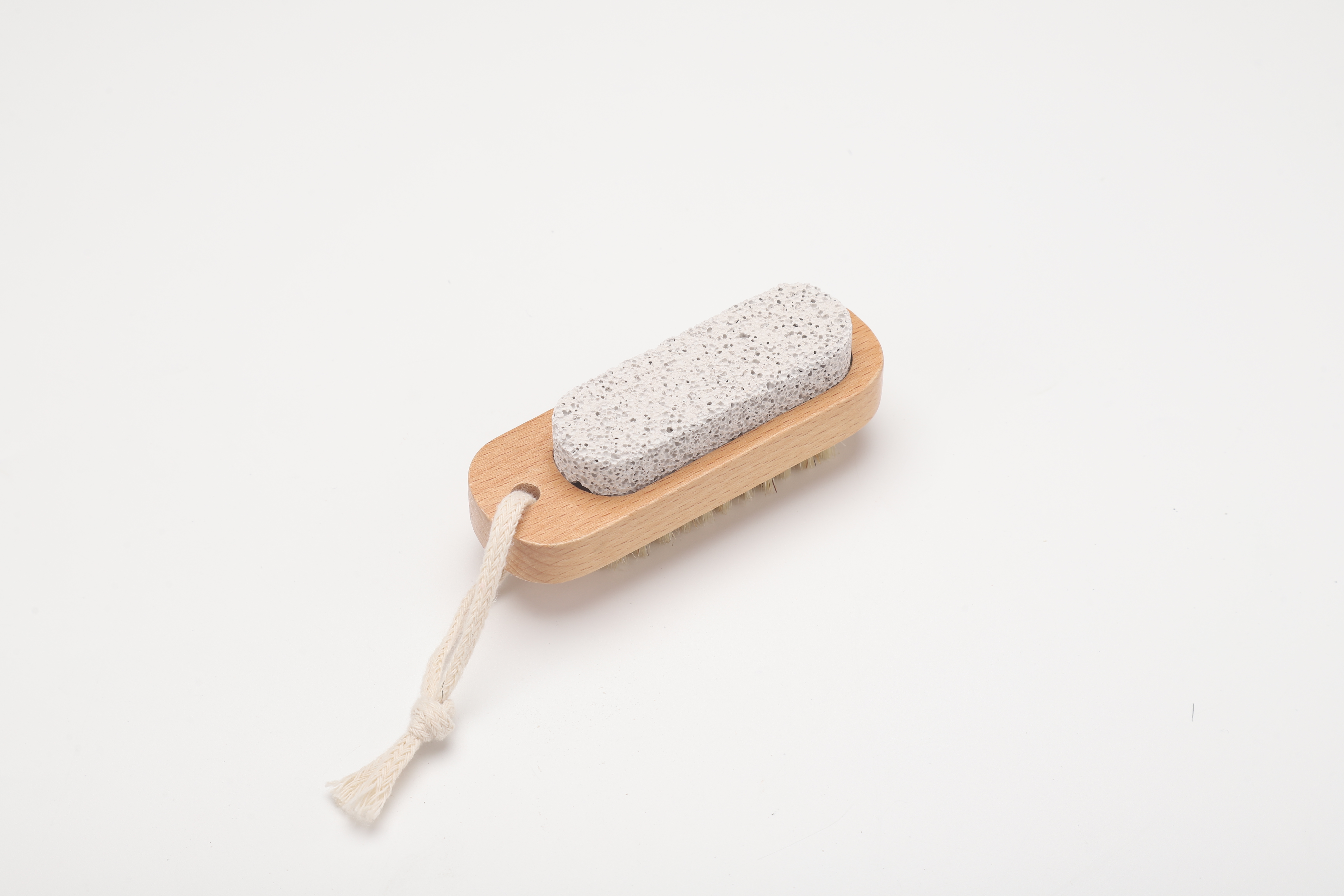
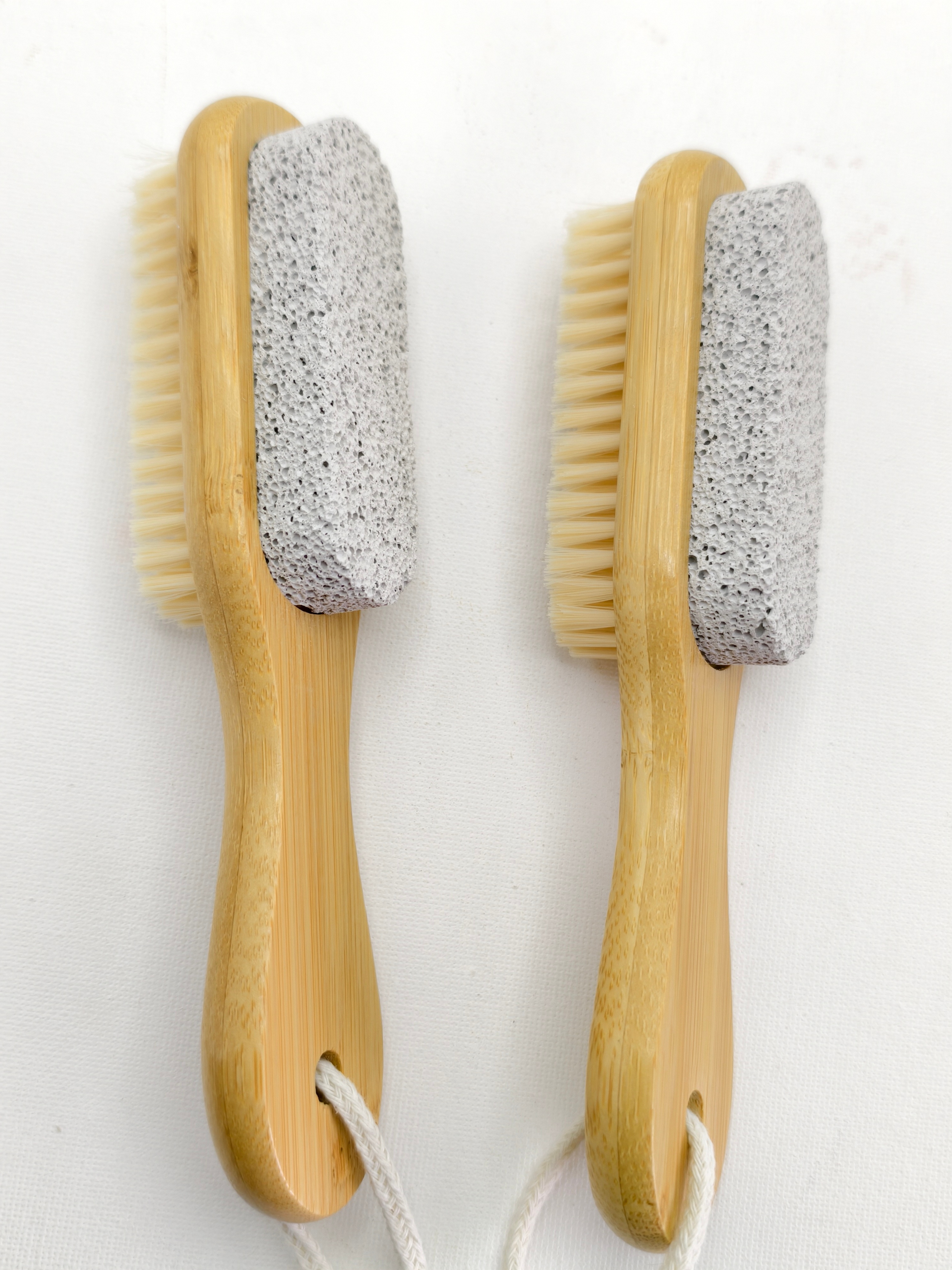
For this routine a mid-sized handheld brush is the most useful single tool: small enough for the arms and neck, firm enough for the legs, and easy to grip with dry hands.
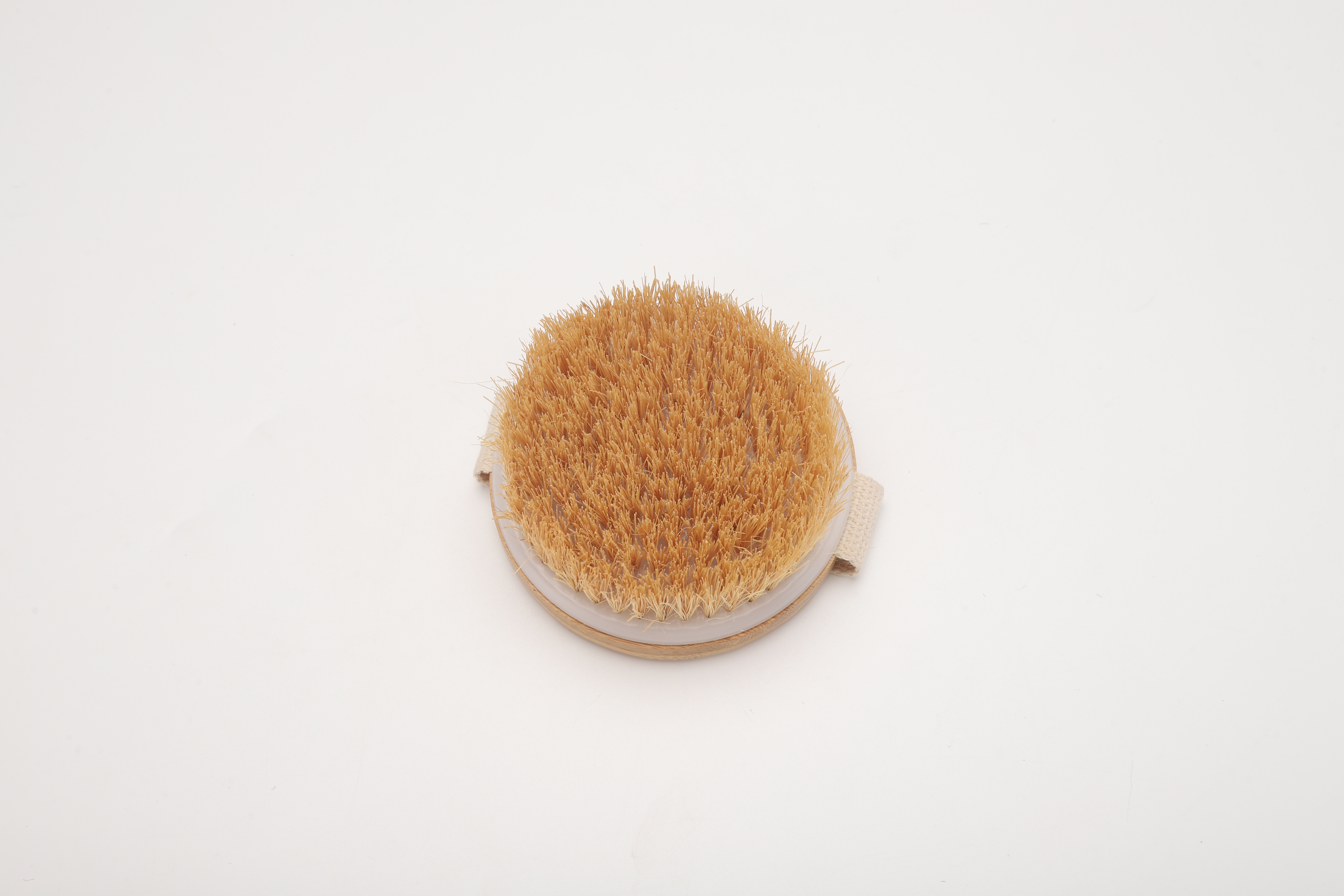 Bamboo Sisal Handheld Brush with Hard BristlesA sisal and bamboo handheld brush with firm, densely planted bristles for body brushing and an easy grip during routines.View Product →
Store it bristle-down or hanging in a dry place. A brush that stays damp grows bacteria in the tuft base, and a contaminated brush undoes the benefit of the routine entirely.
Who Should Skip Dry Brushing
Dry brushing is safe for most healthy adults, but it is the wrong tool in a handful of situations. Skip it, or ask a clinician first, if any of these apply to you.
- An active eczema or psoriasis flare — friction can worsen inflamed skin and open new cracks.
- Very sensitive or reactive skin that flushes easily.
- Sunburn, fresh shaving irritation, cuts or insect bites.
- Thin or fragile skin, including long-term topical steroid use.
- Prescription retinoid use on the body, which already thins the outer skin layer.
- Any undiagnosed rash. Exfoliating it only obscures the picture for your doctor.
If you are unsure, patch test on the inner forearm for three days before committing to a full routine. And if dry brushing leaves skin tight, stinging or visibly red for more than an hour, the pressure or the bristle is wrong — not your skin.
Frequently Asked Questions About Dry Brushing
No. Cellulite comes from fibrous bands and fat distribution beneath the skin, far below a bristle's reach. Any firmness you notice straight after brushing is temporary fluid movement and fades within hours.
Two or three times a week suits most people. Daily brushing adds little benefit and raises the risk of irritation on the neck, chest and inner arms.
For most people it is gentler. A dry brush exfoliates without water or surfactants, so it does not strip the moisture barrier the way a hot shower and scrub can. A scrub is easier on very dry, flaky skin.
Not in any meaningful way. Lymph is moved by muscle contraction, breathing and arterial pulsation, none of which are changed by brushing the skin.
A soft brush with dense, rounded bristle tips — nylon or a fine natural fibre — plus a light touch. Avoid stiff sisal on the neck and chest.
Before. Dry skin exfoliates more efficiently and suffers less friction damage than damp skin, which is why the routine is always described as happening on dry skin.