

 En
En
 English
 Français
If you have been searching for when is the best time to dry brush because your morning routine feels dull or your skin looks lackluster, here is the short answer: brush in the morning, before your shower, on completely dry skin. Dermatology experts at the Cleveland Clinic recommend this timing because the brush lifts dead skin cells and flakes, which the shower water then rinses away. The whole pass takes one to three minutes, and it links naturally to two steps you probably already do — rinse and moisturize.
Content
Why Morning Beats Evening for Dry Brushing
Your skin performs most of its repair work overnight. Dead keratinocytes are pushed toward the surface while you sleep, which is why skin can feel slightly rough and dull when you wake. Dry brushing sweeps those loose cells away mechanically. Doing it right before a shower lets the water carry the debris off before it settles back into your pores; doing it after a bath is far less effective because the skin is already hydrated and the bristles slide over the surface instead of lifting anything.
Morning also wins on habit and energy. The stimulation of the bristles increases local blood flow, which most people experience as a quick, gentle wake-up. And because the shower is already a fixed daily cue, attaching the brush to that cue makes the routine much easier to keep — a well-established finding in habit research. If you are a night showerer, dry brushing before that shower still works; you simply trade the morning lift for a calmer end-of-day ritual.
- Morning before shower: best for energy, consistency, and lymph flow stimulation.
- Evening before shower: acceptable when night showers are your default.
- Never dry brush wet skin, and always rinse the loosened cells off afterward.
How to Dry Brush the Right Way
The order and direction of your strokes matter more than how hard you press. The goal is to move fluid and loose cells toward the lymph nodes near the heart, using long strokes on the limbs and circular motions on the torso.
- Start at your feet. Brush the soles in small circles, then move up the legs with long sweeping strokes, always toward the heart.
- Brush your arms from the hands and wrists up to the shoulders in the same long-stroke pattern.
- Use circular motions on the abdomen and lower back. For the spinal area, reach with a long-handled brush so you can move from the lower back upward past the shoulder blades.
- For the face, switch to a dedicated soft brush and brush outward in light strokes. We explained the mechanism in detail in our article on how dry brushing with a bamboo face brush improves skin texture and appearance.
- Step into the shower and rinse with warm — not hot — water to wash the lifted cells away.
- Pat the skin dry and apply body oil or lotion while it is still damp to lock in moisture.
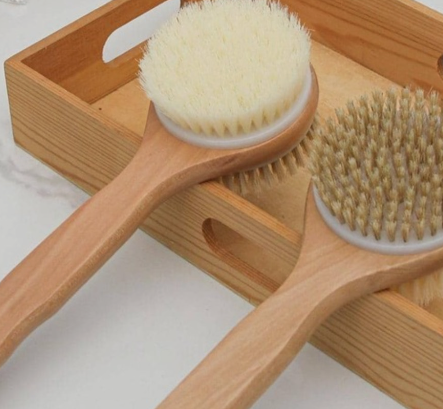
A typical natural dry brush: bamboo handle, hanging strap, wooden base, and natural boar bristles.
How Often and How Long Should You Dry Brush?
Most skin-care practitioners suggest dry brushing one to three times per week. Once your skin adapts, some people move to daily brushing, especially in warmer months when sweat and dead-cell buildup increase. Start on the lower end and let your skin be the guide: if it feels tight or looks red for more than a few minutes, cut back.
Frequency matters more as skin cell turnover slows with age. In your twenties, the renewal cycle takes about three weeks; by your sixties, it can stretch to six weeks or more. Because older skin sheds less efficiently, the mechanical exfoliation from a brush becomes a more useful maintenance step.
Sessions per week by skin type; general guidance from dermatology and skincare sources.
Approximate renewal cycles; older skin benefits more from regular mechanical exfoliation.
Keep Sessions Short
Dry brushing does not need to be a long ceremony. A full-body pass should take three to four minutes. Use the timing as a rough guide: about 60 seconds for each leg, 30 seconds per arm, 30 seconds for the back, and 15 seconds around the abdomen. Longer sessions do not increase benefits — they mainly increase irritation.
Total session stays under four minutes even for a full-body pass.
Which Brush Should You Use?
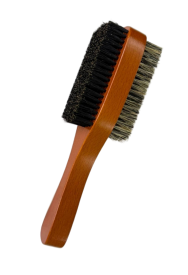
Boar bristle is the most common recommendation for body brushing because it is firm yet flexible. Goat and horsehair options are softer and suit sensitive skin or facial use. Synthetic bristles dry quickly and are easier to maintain in wet-dry routines, while loofah and hemp tools belong in the shower rather than the dry-brush ritual.
| Material | Bristle feel | Best use | Care and lifespan |
|---|---|---|---|
| Boar bristle | Firm with slight give | Full-body dry brushing | Air dry 2-3 hours; wash monthly; 6-12 months |
| Goat or horsehair | Soft | Face and sensitive skin | Clean monthly; replace every 6-8 months |
| Synthetic | Medium, dries fast | Wet-dry brushing and easy care | Rinse and air dry; 6-12 months |
| Loofah or hemp | Coarse | Shower exfoliation, not dry brushing | Rinse well; replace every 4-6 weeks |
Choosing by Body Area and Routine
For a general full-body brush, look for dense natural bristles set into a stable wooden base. The bamboo-handle natural bristle massage bath brush from Kafete combines a wide head with boar bristles and an ergonomic bamboo handle, which works well for dry brushing and transitions to wet use if you want one tool for both.
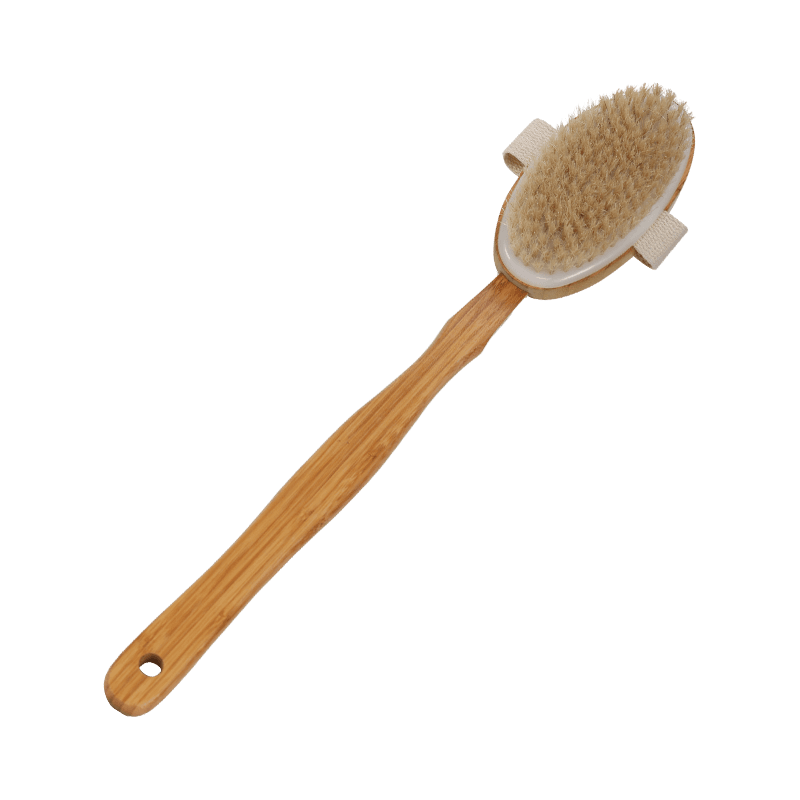 Custom Eco-Friendly Bamboo Handle Natural Bristle Massage Bath Brush Supplier, CNingbo Kafete Daily Necessities Co., Ltd is custom Eco-Friendly Bamboo Handle Natural Bristle Massage Bath Brush supplier and Eco-Friendl...View Product →
If your lower back is the main target, a long handle avoids awkward shoulder angles. The long-handled wooden dry and wet body brush lets you reach the full spine area while keeping your stroke direction toward the heart.
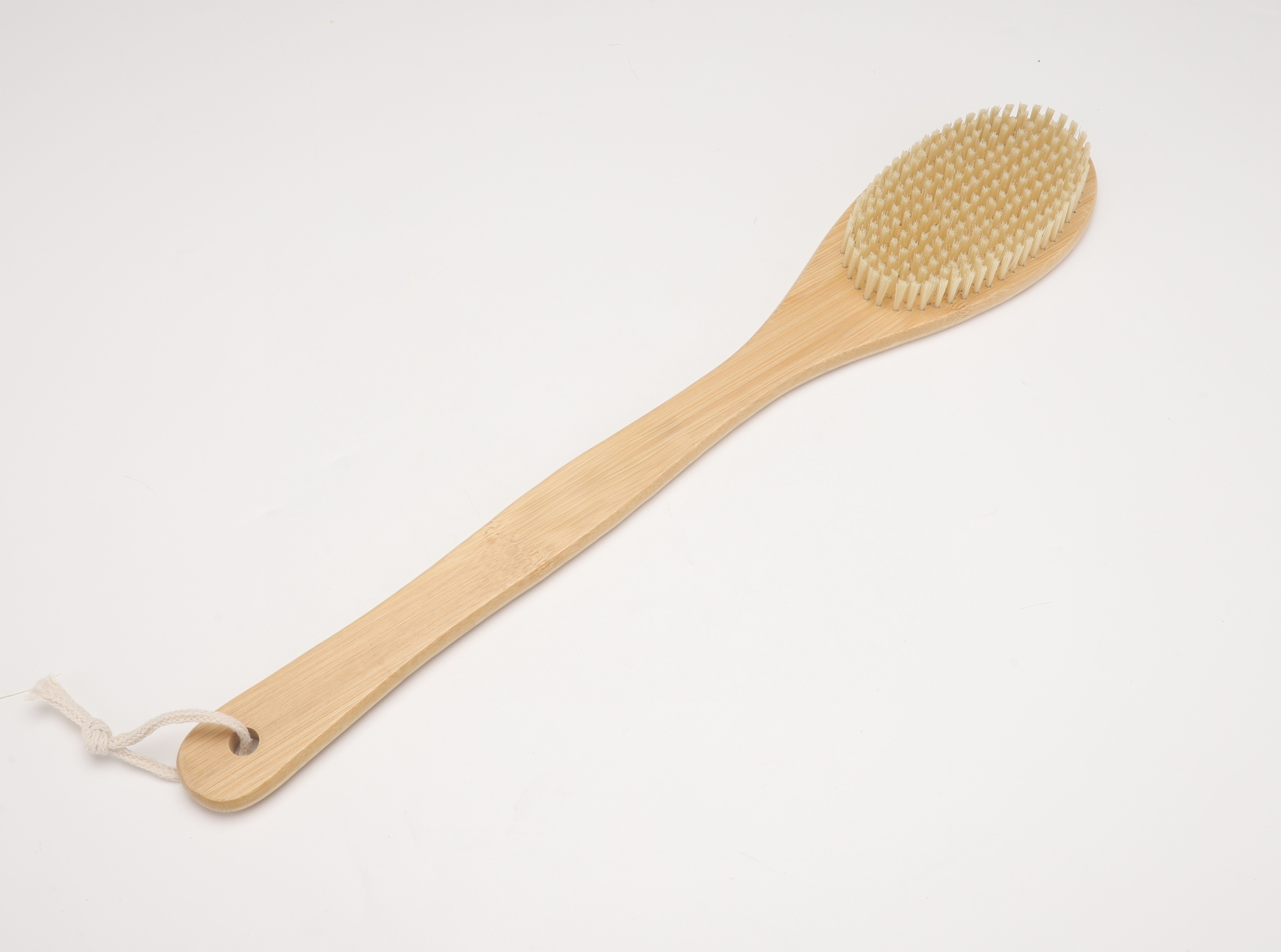 Custom Long Handle Natural Wooden Bath Brush Dry & Wet Body Brush Supplier, CompNingbo Kafete Daily Necessities Co., Ltd is custom Long Handle Natural Wooden Bath Brush Dry & Wet Body Brush supplier and Long Handle Na...View Product →
Facial skin requires much softer bristles. A bamboo face brush for dry and wet brushing uses fine goat bristle that gently exfoliates the cheeks and jawline without causing micro-tears.
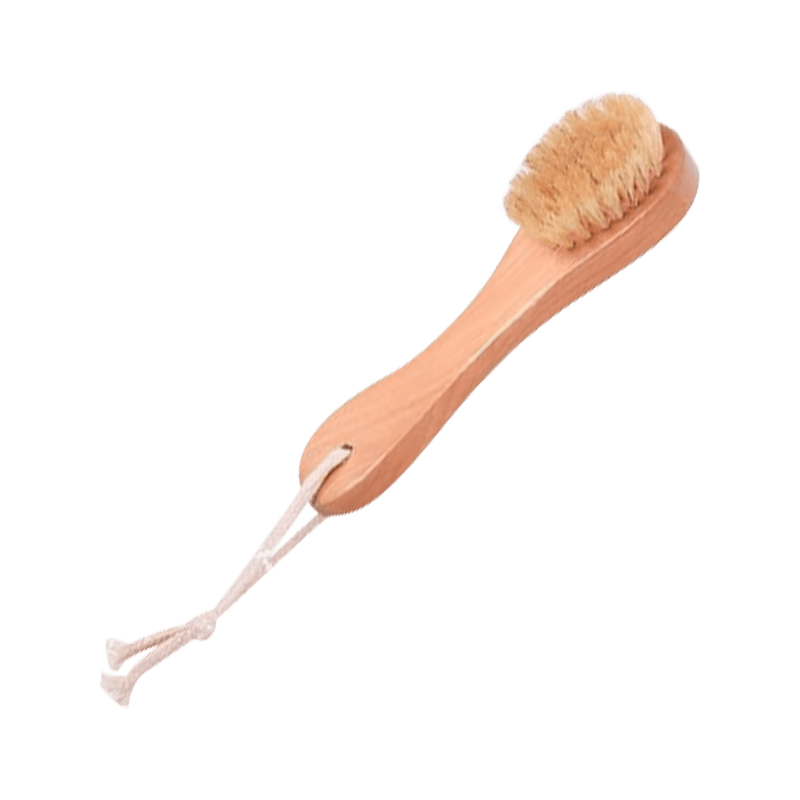 Custom Bamboo Face Brush For Dry And Wet Brushing Supplier, CompanyNingbo Kafete Daily Necessities Co., Ltd is custom Bamboo Face Brush For Dry And Wet Brushing supplier and Bamboo Face Brush For Dry And ...View Product →
For routines that alternate between dry and wet, choose a construction that resists moisture damage; our durable wet-dry body brushes are built with sealed bamboo heads that handle both conditions well.
When to Skip Dry Brushing
Dry brushing is simple, but it is not risk-free. The bristles are mechanical exfoliators, so they should not be used on skin that is already compromised.
- Skip it over eczema flare-ups, psoriasis plaques, sunburn, cuts, or broken skin. Brushing over irritated tissue spreads inflammation and can introduce bacteria.
- Use caution with varicose veins or lymphoedema; check with a doctor before stimulating those areas.
- Never brush your face with a body brush; the bristles are far too coarse for facial tissue.
- If you feel burning or see redness that lasts more than 15 minutes, reduce pressure and frequency until your skin settles.
Frequently Asked Questions
Q1: Do you dry brush before or after a shower?
Before. Dry brushing works on completely dry skin, and the shower immediately rinses away the dead cells and flakes the brush lifts. Brushing after a shower is much less effective because water softens the skin and the bristles slide instead of exfoliating.
Q2: How often should you dry brush?
Most people do well with one to three sessions per week. Once your skin tolerates it, daily dry brushing is fine for normal and oily skin. Sensitive skin should stay at one or two sessions weekly and always follow with moisturizer.
Q3: Does dry brushing help with cellulite?
It can temporarily improve the appearance of cellulite by boosting circulation and reducing fluid retention, but it does not change the underlying fat structure. Results are short-lived, so consistency matters more than intensity.
Q4: Which direction should you dry brush?
Always toward the heart. That means long strokes from the feet up the legs, from the hands up the arms, and from the lower back toward the shoulder blades. This direction supports lymphatic drainage and venous return.
Q5: Can you dry brush sensitive skin?
Yes, if you use a soft-bristle brush, light pressure, and a lower frequency of one to two times per week. Avoid active flare-ups, broken skin, and sunburned areas. Test a small patch first if you are unsure.
Q6: How long does it take to see dry brushing results?
Smoother skin is noticeable after the first session because the rough outer layer is removed. Deeper effects, such as improved circulation and a more even skin texture, usually appear after two to four weeks of consistent two-minute sessions.
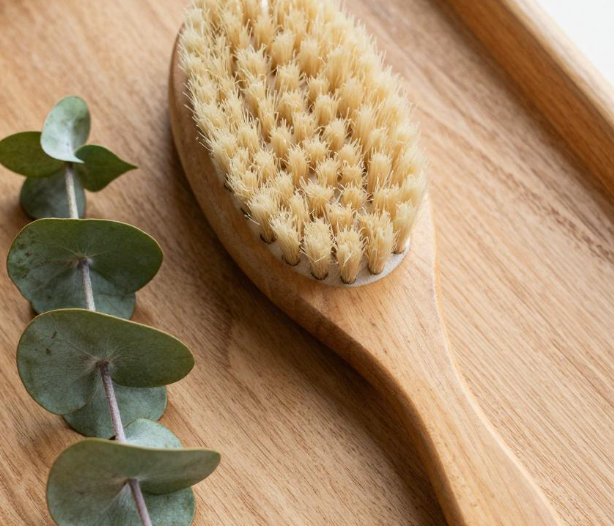
.png "mini bamboo nail brush")
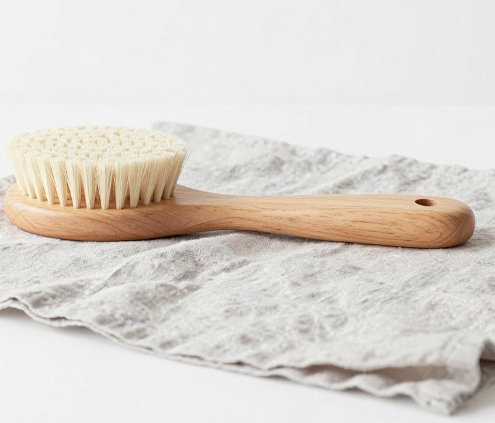
.jpg "long handle loofa bath brush")
.jpg "long handle loofa bath brush")


